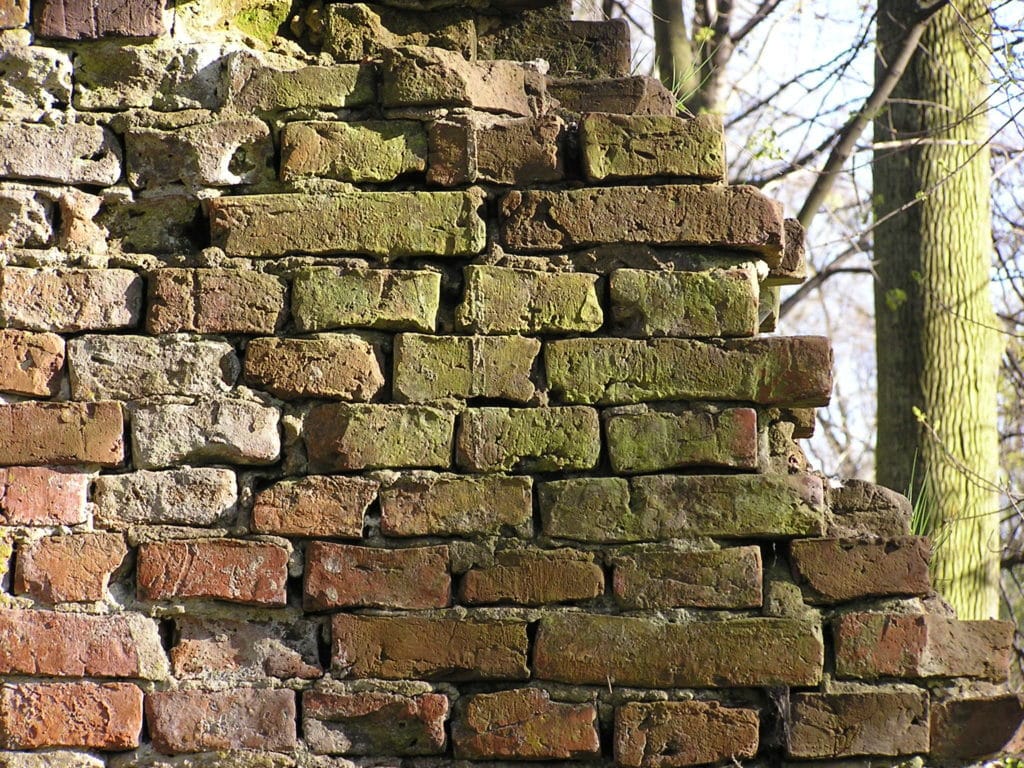
Several buildings have terraced walls or terraced fences with their neighbors. Sometimes, a property owner identifies necessary repairs to be made, for example, on a semi-detached wall. In this process, it is very important to know the applicable rules before undertaking a process involving the repair or modification of an adjacent wall. Analysis of Goodman v. Snitzer, 2019 QCCQ 3463.
Author: Manuel St-Aubin, lawyer
Date of writing: May 4, 2020
What is a fence or semi-detached wall?
The general principle is that a fence or semi-detached wall is normally located on the boundary line of two properties.
The Civil Code of Quebec provides the following rule in article 1003:
- 1003. Any fence that is located on the boundary line is presumed to be adjacent. Similarly, the wall on which the buildings are supported, on either side, is presumed to be adjacent to the shelter.
There is therefore a legal presumption that a wall is adjoining if the buildings on each side depend on this building. In the case of a fence, this presumption applies if the fence is located on the boundary line of the land.
This presumption of joint service imposed by the Civil Code is straightforward and can therefore be overturned by proof to the contrary (for example, with the expertise of surveyors in certain cases).
As long as a wall or fence is actually adjoining, the neighbors hold this wall or fence in undivided co-ownership. The rules of undivided co-ownership therefore apply between these neighbors, in addition to the special rules regarding fences and terraced structures.
Under the rules of undivided co-ownership, co-owners of a semi-detached wall or fence must manage it jointly. Decisions regarding the management of the property may include, for example, the decision to repair the wall or fence.
Therefore, neighbors holding a semi-detached wall or a party fence in equal halves must make decisions by “majority of shareholders, in number of shares.”
As for a semi-detached wall, “each owner may build against a semi-detached wall and place beams and joists there. He must obtain the agreement of the other owner on how to do this.”
Thus, often, decisions regarding a wall or party fence must be made unanimously among neighboring neighbors. This situation can sometimes lead to disputes in the absence of a neighbor’s agreement, for example, regarding the work to be done.
Case: Disagreement between neighbors over work on a semi-detached wall
In the event of a disagreement with a neighbor with whom a person holds a semi-detached wall, it is important not to unilaterally carry out work on this wall or fence.
Indeed, in the event of a disagreement, it would be important to turn to the courts to rule on the dispute.
On the subject, several cases on the matter have been heard by the courts, including the Quebec Court, in Goodman v. Snitzer, judgment rendered in 2019 by Judge Zaor J.C.Q.
In this case, the plaintiff requests from the defendant half of the estimated value of reconstructing a retaining wall erected on the boundary line of the land.
A structural engineer had determined that “the adjacent wall is damaged in several places, is significantly leaning, is insufficient to contain the lateral pressures of the soil, and threatens to collapse.”
While the plaintiffs wished to reconstruct the adjacent wall, the defendant argued that such reconstruction work was not necessary.
In the absence of an agreement between the parties, the plaintiffs initially requested “the Superior Court to obtain a safeguard order directing the defendant to access its property and demolish the adjacent wall.”
The request for a safeguard order had been granted by the Superior Court, so the dispute in question in the current judgment is the share that must be borne by the defendant in the cost of reconstructing the adjacent wall.
The judge analyzed the application of the rules of article 1006 C.c.Q. which reads as follows:
- 1006. The maintenance, repair, and reconstruction of the adjacent wall are the responsibility of the owners, proportionally to each one’s rights.
- The owner who does not use the adjacent wall may waive his right and thus free himself from his obligation to contribute to the costs, by sending a notice to that effect to the registry office and promptly sending a copy of that notice to the other owners. This notice implies a waiver of the use of the wall.
In this case, Judge Zaor stated the following:
- Closer to us, Professor Denys-Claude Lamontagne mentions, regarding article 1006 C.c.Q. that the obligation for neighbors to bear the common costs for necessary repairs — including reconstruction — aims “to ensure the preservation of the wall and to prevent its collapse.”
- The Court is therefore of the opinion that the issue is not whether it would be prudent, timely, or appropriate to reconstruct the adjacent wall, but rather to determine the necessity of carrying out reconstruction work in order to respect the destination of the adjacent wall. This is what the Superior Court recalls in the ruling Orazio v. Morena cited above: “The necessity of work to respect the destination of the wall is the only criterion to be used, regardless of the source of this requirement.”
- The French Larousse online dictionary provides the following definitions of the word necessity: The character of what is necessary, of what cannot be done without; The character of what is inevitable, unavoidable; imperative need, necessary thing.
- In short, and to succeed, the plaintiffs must prove by a preponderance of the evidence that the use made of the adjacent wall, that is to say, in this case, to retain the fill of the defendant’s property, was at risk of collapsing, hence the necessity to reconstruct it in its entirety.
- According to the Court, the notion of necessity of the work refers to the idea of a situation where the urgency to act is at stake in order to safeguard a right or prevent it from being endangered.
It is therefore important for the Court to keep in mind that the necessity of the work to maintain the destination of the adjacent wall is the criterion for determining whether the plaintiffs had the right to claim from the defendant their share of the reconstruction costs of the wall.
Based on the analysis of the evidence presented at trial, the Court dismisses the plaintiffs’ request, notably for the following reasons:
- In summary, the Court is of the opinion that the respondent’s expert conducted a more rigorous and objective analysis of the situation. Without obscuring the leaning of the crown and the presence of signs of wear on the nearly century-old adjacent wall, Mr. Bartosh took into account the absence of changes in the condition of the adjacent wall for several years. In itself, this decisive indicator, according to the Court, rightly prevented the imminence of danger and the compromise of the entire adjacent wall.
- Finally, the evidence presented by the defense leads the Court to believe that the large-scale work undertaken by the plaintiffs weighed heavily in the decision to demolish the wall as early as 2015. Given that the waterproofing of the foundations required excavation forcing digging nearly three feet below the foundation of the property, the requirements of regulatory authorities (CNESST), the protective and reinforcement measures to be taken into account, the reluctance expressed by contractor Piccioni until his refusal to do the work unless the wall was demolished, and finally the strong likelihood that the wall could collapse on its own during the work , it is indeed reasonable to believe, as the defendant claims, that the plaintiffs preferred here to proceed immediately with the demolition of the most troublesome adjoining wall.
- That being said, the Court dismisses the plaintiffs’ action for lack of sufficient evidence and proof to support their legal claims.
In this case, it is therefore noted that the plaintiff did not prove the necessity of the reconstruction of the adjacent wall and, consequently, the claim against the defendant for half of the cost of reconstructing the adjacent wall was dismissed.
Key takeaways in summary
In the event of a disagreement between neighbors holding a semi-detached wall, it is normally necessary not to unilaterally proceed with work on this wall or fence.
Indeed, in the event of a disagreement, the solution often lies in turning to the courts to resolve the dispute.
In particular, in the case of the reconstruction of a semi-detached wall (art. 1006 C.c.Q.), it is important that this work be “necessary” to ensure the use for which the wall is intended. Failing to demonstrate that such work is necessary, a neighbor claiming the costs of repair or reconstruction of the adjacent wall from his neighbor may have his request denied.
WARNING: The information contained in this article is of a general nature and does not constitute legal advice or necessarily reflect the state of the law exhaustively. Facts may vary from one situation to another and may eventually alter any legal response. It is strongly recommended to consult a lawyer regarding your particular case.
Bambara v. Gagnon Tremblay, 2015 QCCS 3065, para. 26: http://canlii.ca/t/gjvz3. The main issue in dispute in this case is the ownership of trees and a hedge of cedars, which concerns the issue of the ownership of trees located on the boundary line of the property.
Articles 1009-1037 C.c.Q.
Article 1002-1008 C.c.Q.
Art. 1025 C.c.Q.
Art. 1026 C.c.Q.
Art. 1006 C.c.Q.
2019 QCCQ 3463: http://canlii.ca/t/j17qs
Goodman v. Snitzer, supra note 7, para. 14.
Id., para. 16.
Id., para. 19.
Id., para. 21.
Tag: the regulations for a party wall