
TheHuawei team has been talking to me about theHonor brand for some time as if it were describing a completely independent entity from their brand, something built ad-hocfor the youth (but also “young at heart”), often withlow-cost products. A modus operandi that I have always found difficult to understand. I mean, why not differentiate the product range while keeping the Huawei logo?
It seems that the answer to my question required more than just a press release. It turns out that, to understand how the two brands are so different from each other, I fly to the Far East, where it all began: inShenzhen, theAsian silicon valley, where Huawei is based.
Shenzhen, Silicon Valley in China
After dozens and dozens of hours of flight, I land inHong Kong; there I wait for the group from all over Europe. Together, we cross the formidable Chinese border to reach the megacity of Shenzhen.
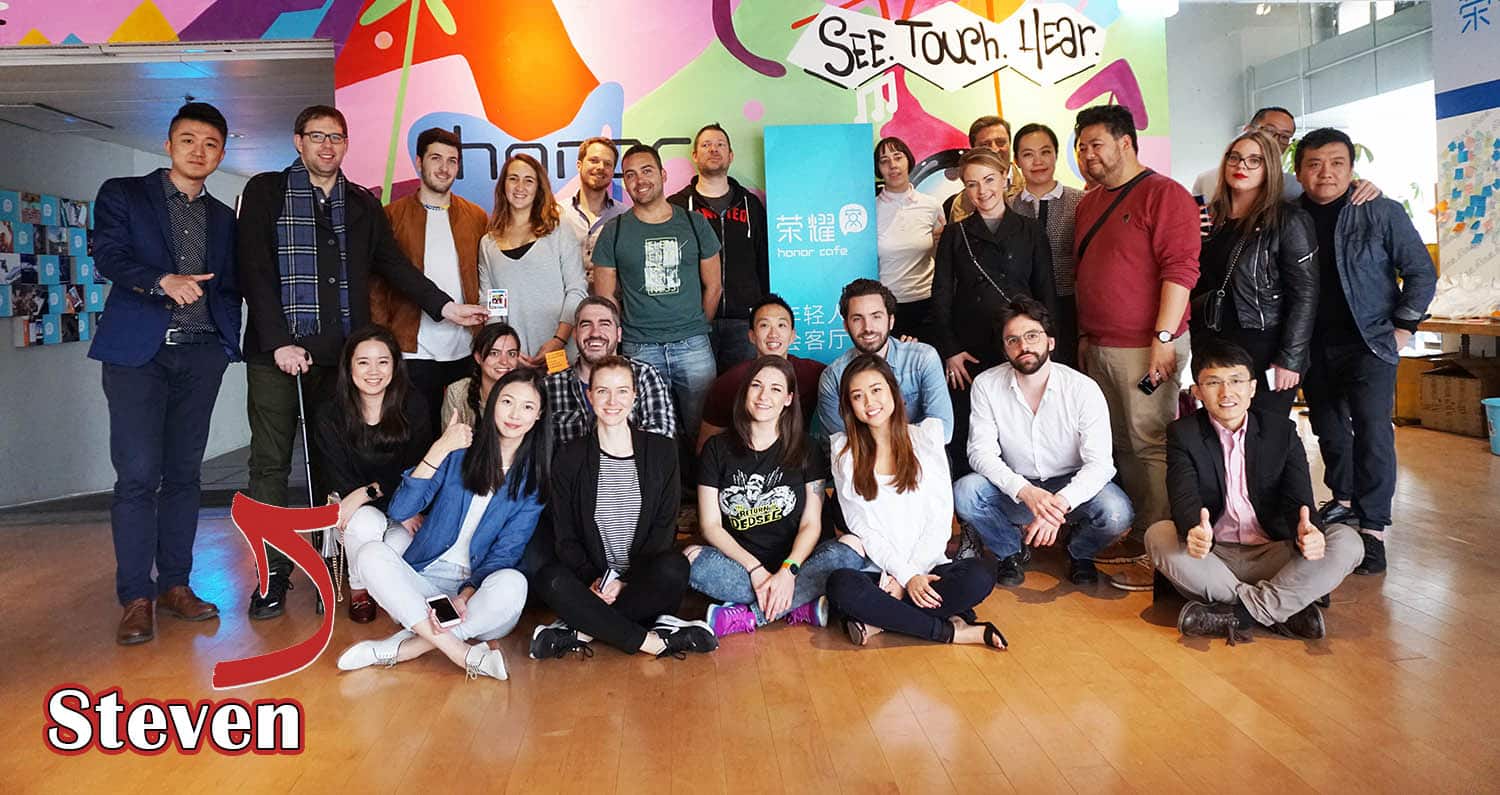
The history of Shenzhen, Steven If you want to know how the first two days in China went, I recommend reading this travel diary. tells me (that’s his Western name), a very young Huawei employee, recruited from one of the thousands of universities Shenzhen was officially born 39 years ago, in 1978, at the request of Deng Xiaoping. At that time, it was nothing more than a fishing village: today, it has over 11 million inhabitants,” explains Steven.
The sudden and exponential development, however, makes Shenzhen a soulless city, quietly comparable to a huge factory that has neither beginning nor end.
Shenzhen is a “special” place because it is part of thespecial economic zones of China, zones whose economic management is particularly flexible, allowing companies that settle there to develop their business more easily.
In this context of particular advantage, the giant Huawei was born in1987, a brand that today has a mega complex of 1600 square meters, north of the city. The Chinese headquarters is literally a city within a city, or at least, that’s what our local guides tell us.
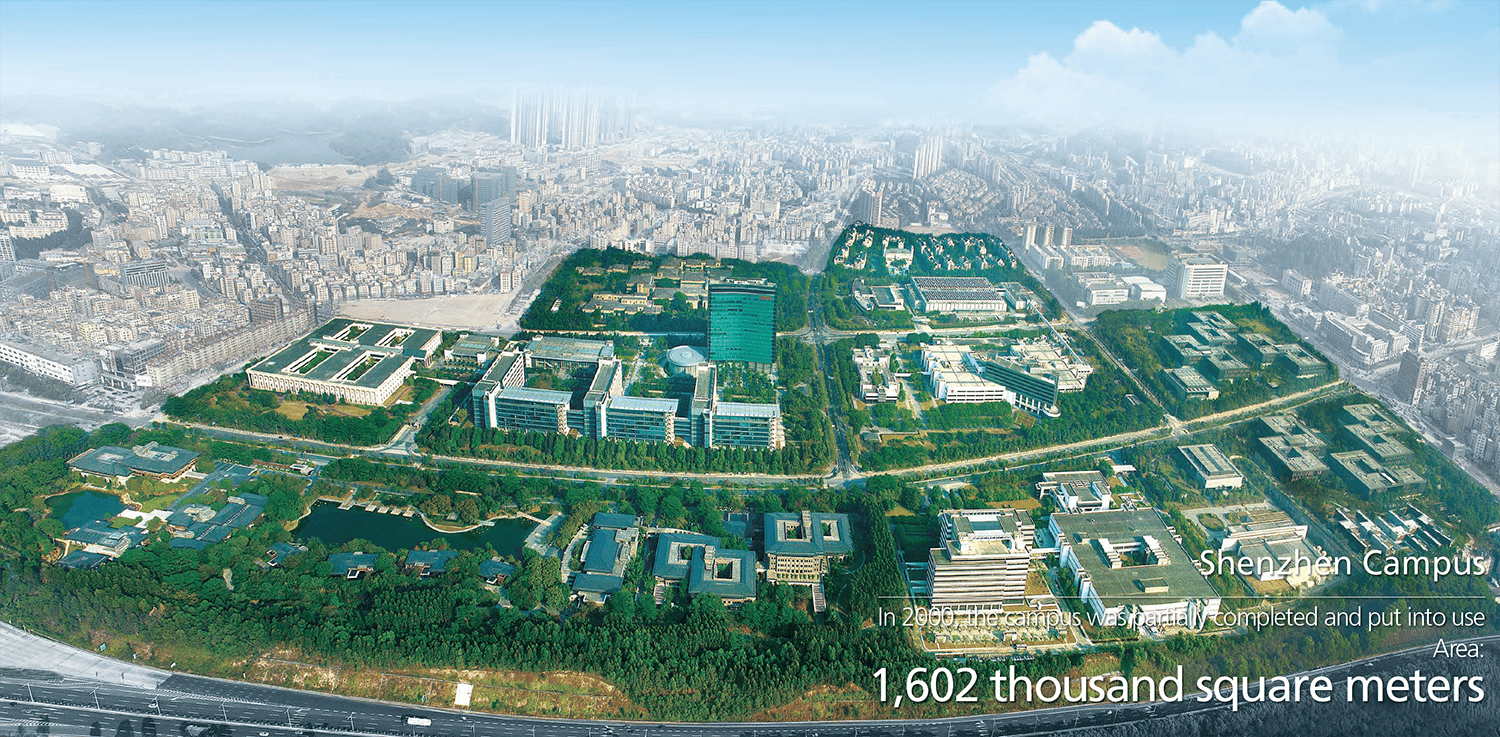
Here are dozens and dozens of buildings where all the production processes of various Huawei devices (and they are not just smartphones) take place.
Huawei: the city within the city
On our first day of stay, for example, we were taken to see with our own eyes two laboratories inside theHuawei Cloud Park. The first place is a laboratory where developing smartphones are literally “tortured.” Before being sent to production, smartphones undergo all kinds of tests: from thedrop test (a mechanical arm drops the smartphone onto a hard surface) to check the resistance of each side of the device, to the washing machine test (where a bag filled with all sorts of objects is simulated) to check scratch and dust resistance. Or, the smartphone is placed inside supplies/freezers capable of going from -25° to 50° Celsius in a few minutes. If the phone “survives” these and dozens of other tests, it means it is ready to take on the global market.
Here, unfortunately, it was categorically forbidden to take photos in order not to compromise the secrets of the tests developed in the Cloud Park.
The other laboratory we were sent to is theConsumer Lab, a seeminglyuseless place. Here, many products that do not fit the current business plans undertaken by Huawei are disassembled and analyzed in detail — through the technique ofreverse engineering. The engineers at the Consumer Lab analyzehome gaming consoles (PS4 and Xbox One first), allvirtual reality viewers (Playstation VR, HTC Vive, Oculus, etc.) but alsodrones, robots, wearables, systems for the Internet of Things (IoT), and augmented reality visors such asHolo Lens.
On one of the walls of the Consumer Lab is this gigantic diagram summarizing the “reverse explorations” undertaken by Huawei against direct and indirect corrections.
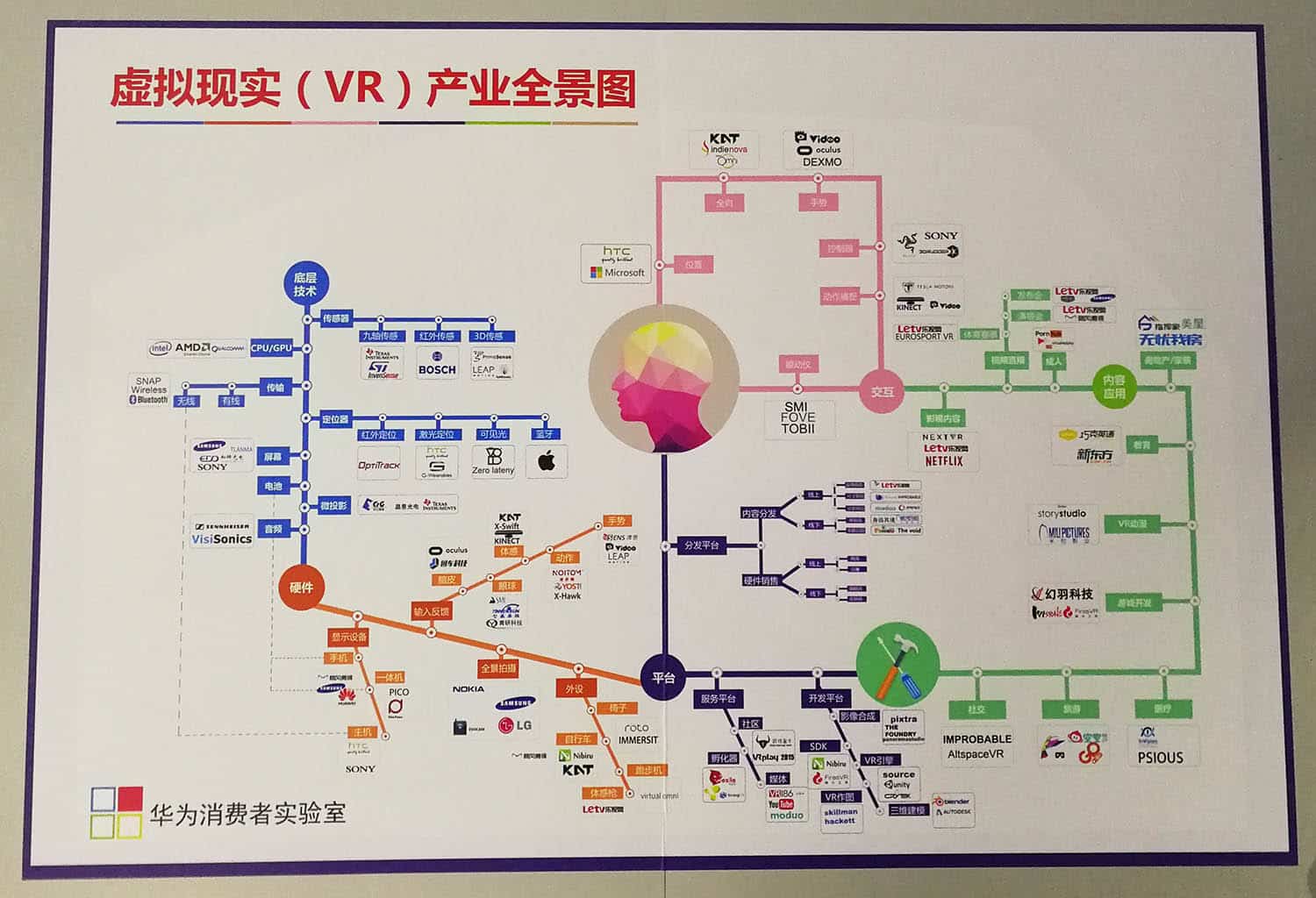
But for whom? What is the purpose of this immense analytical work? It’s very simple. If Huawei’s management decided one day to take, for example, the path of virtual reality, they will know perfectly where to start and what to focus on. It’s one way to save time in a resolutely aggressive market.
I know, I may have gone on too long, but all this narrative was necessary to help you understandwhat laid the foundations of the Honor brand: the solid base that Huawei has built over 30 years of hard work.
Honor was thus born as the side of a giant like Huawei and at first glance, it seems that it wants to strongly divide the streets of the two despite everything that unites them.
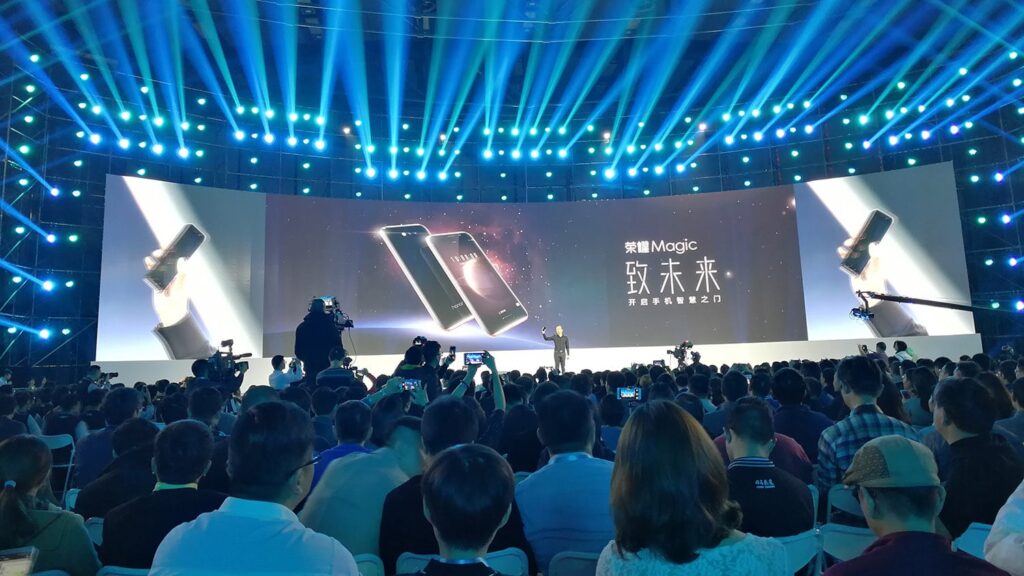
But this story of the “young brand for the young (inside and out)” does not convince all the way. Why shouldn’t Huawei be for the young? It sounds like a cover of some sort. But I didn’t receive the “enlightenment” until I attended the launch conference for the newHonor Magic, the smartphone that promises wonders and which, for now, will be marketed exclusively in China.
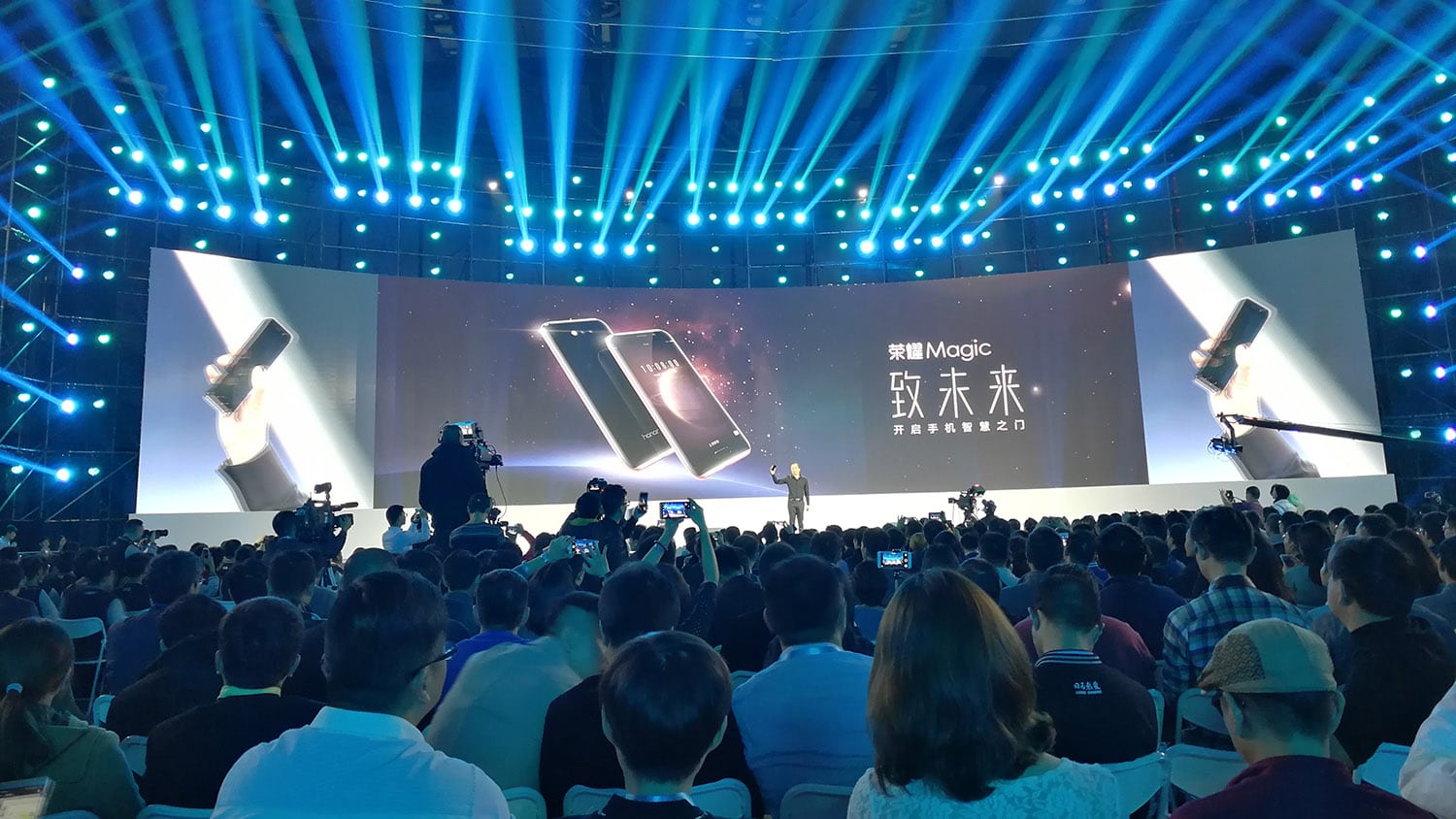
15.12.2016 — Chinese launch of Honor Magic at Shenzhen Universiade Sports Centre
Why Honor is not Huawei
When on stage, Mr. George Zhang, CEO of Honor, begins to unveil the futuristic features (like integrated artificial intelligence) ofHonor Magic, some things become immediately clearer to me: Honor is the true creative laboratory of Huawei, a brand with which they can experiment (both in terms of design and software as in the case of Honor Magic) without fear of affecting the good name of Huawei built with effort over the years.
READ ALSO: Everything you need to know about Honor Magic
Honor is like a carefree young man who has the right to be wrong, without too many consequences. The gentleman in the suit who goes by the name of Huawei has the obligation to behave like a good family man. Here’s why Honor is so inextricably linked to the concept of “youth.”
But the differences don’t stop there: the two brands are distinctly different even when it comes tomarketing andsales methods. It’s Mr. George Zhao himself who said this during a long Q&A session with the press.
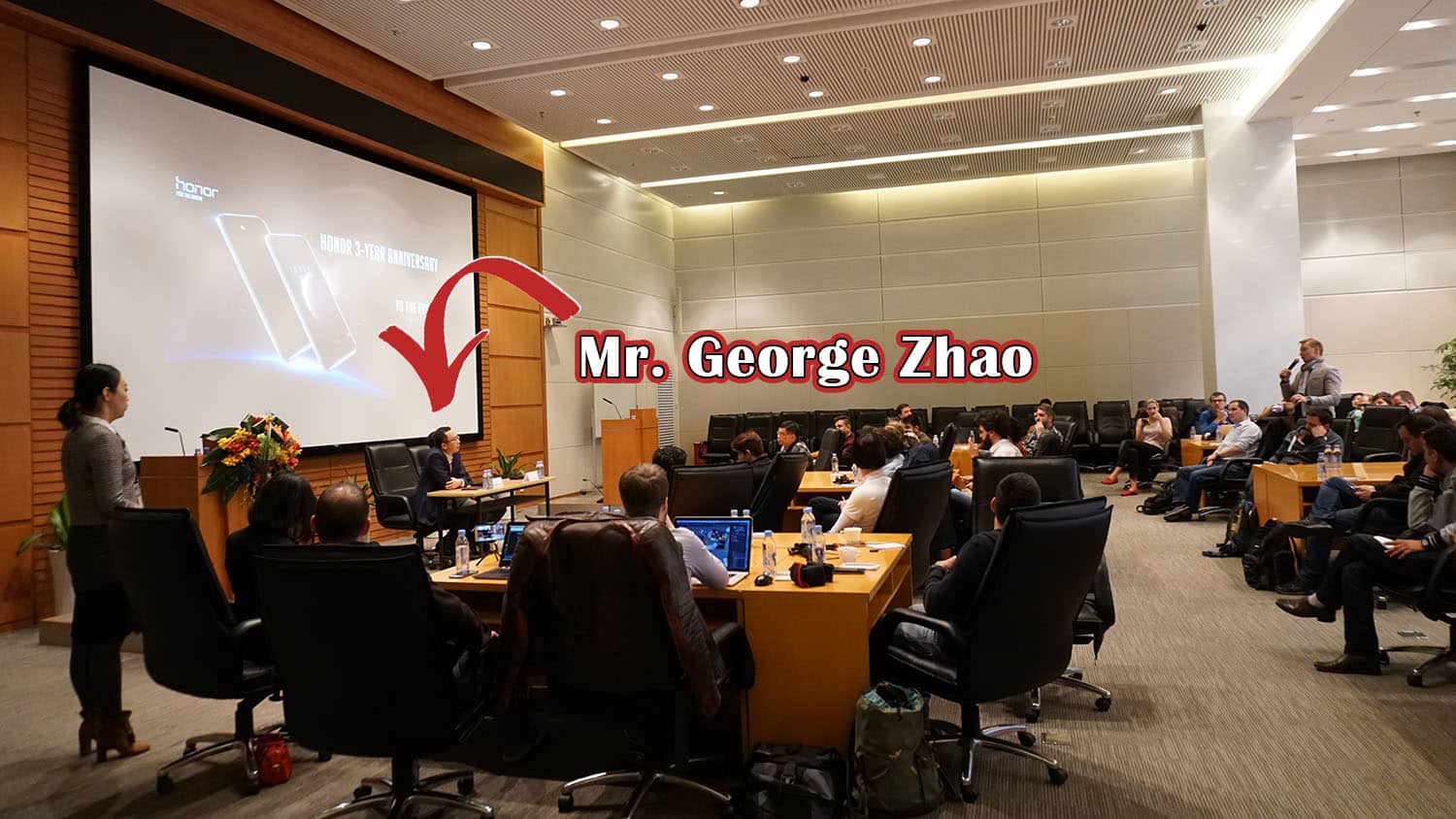
Mr. Zhao explains that the promotion of thiselectronic band — as he defines it — takes place from the bottom up. Let me explain better: how many advertising campaigns have you found online dedicated to Honor? I’ll tell you, very few. It’s the consumer themselves who, once they’ve bought an Honor product, will go on forums or any other online space to say how great they have been — for example — with their beautiful and shinyHonor 8 Here, we go to Huawei’s headquarters for a group interview with Mr. George Zhao, CEO of Honor.
Now, let me ask you another question: how many Huawei ads have you seen lately? The sleek cities and Hollywood divas (Scarlett Johansson andHenry Cavill) lend their own faces to promote the latest arrivalHuawei P9.
In short, money is paid in the rain for Huawei, the brand in the “suit and tie” and almost “organic” promotion for Honor, the “young runaway”; which only sells online.
Honor thus abandons theaggressiveness that distinguishes the Chinese market, where the important thing is to sell at all costs, in favor of asofter approach that places the product at a competitive price preferring exclusive online sales.
Best-seller n° 1 
- ✔【6.5 inches high definition and 1080P】FullView screen with almost borderless design…
- ✔【Ultra Sharp 48MP Camera】Capture the details that matter, the main camera 48MP…
- ✔【Powerful Kirin 710 chipset】With a SoC based on the 12 nm Cortex-A73 generation and a Mali G51 GPU. The…
Smartphone Honor 9X Lite, 4GB RAM 128GB ROM Mobile phone,…
159.99 EUR Buy on Amazon Best-seller n° 2 
- ✔【WONDER CAP with Dewdrop screen and sleek design】Bold, audacious, and beautiful, the FHD screen…
- ✔【Ultra-Wide Angle Triple AI Camera 48MP】48MP HONOR 20 S. Main camera using…
- ✔【24-megapixel front camera】Gives you brighter and more detailed selfies with…
Smartphone Honor 20S, 6GB RAM 128GB ROM, 6.15″
185.99 EUR Buy on Amazon Honor Café: why create it?
This type of approach is also confirmed by the creation of theHonor Café in Shenzhen, a space located in a shopping center and open 24 hours a day, situated in the youngest area of the Chinese metropolis. Here, anyone who wants to relax by reading a good book (provided by), work using the free Wi-Fi, or get their hands on one of the Honor products on display.
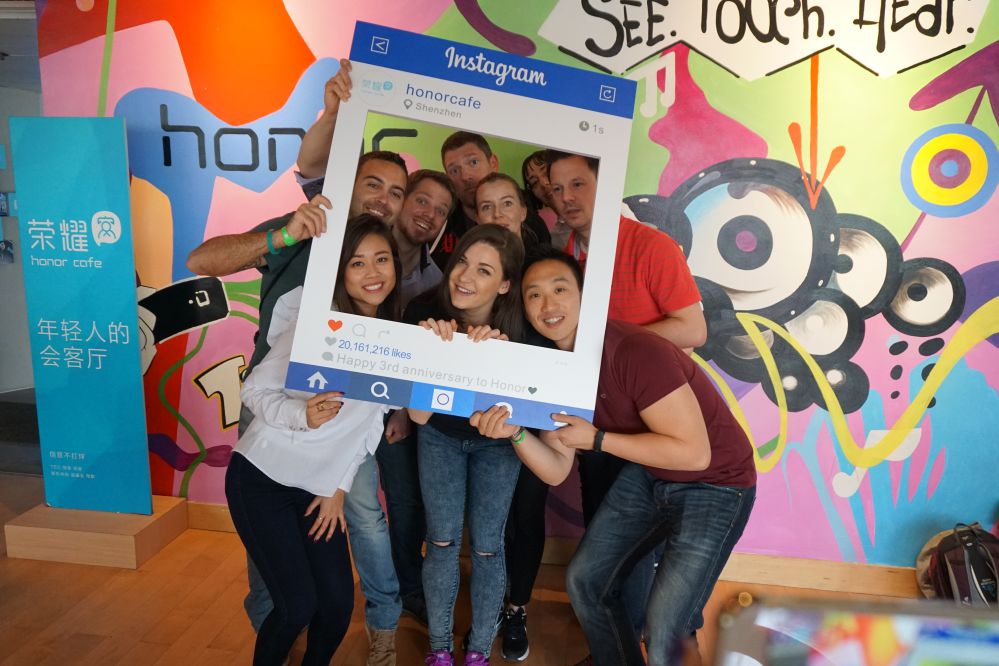 Honor Café — Shenzhen — China
 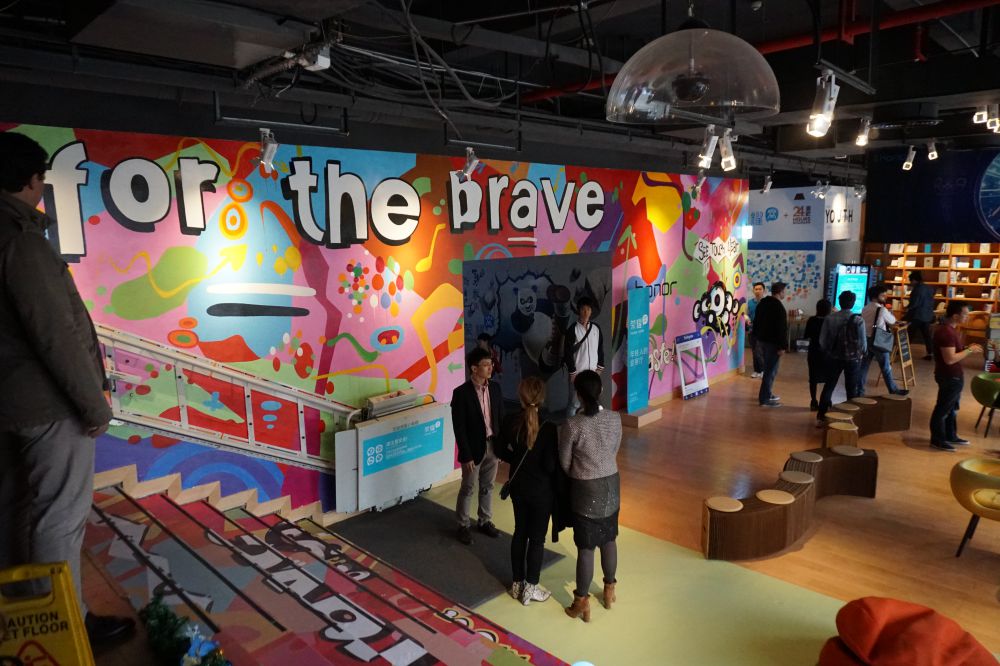 Honor Café — Shenzhen — China
 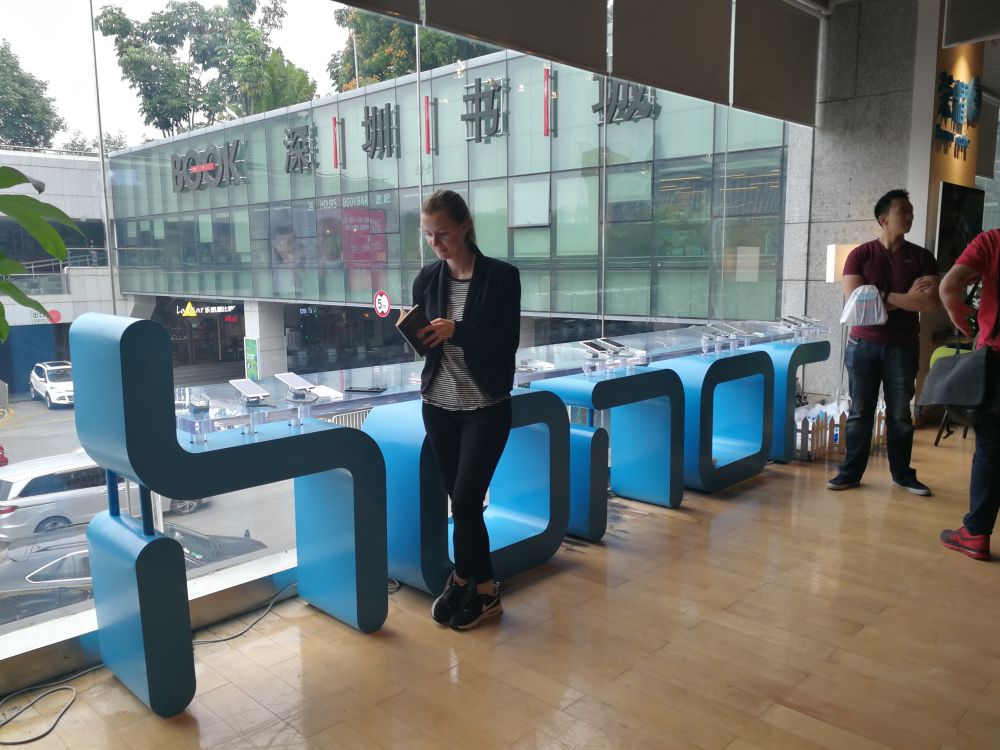 Honor Café — Shenzhen — China
 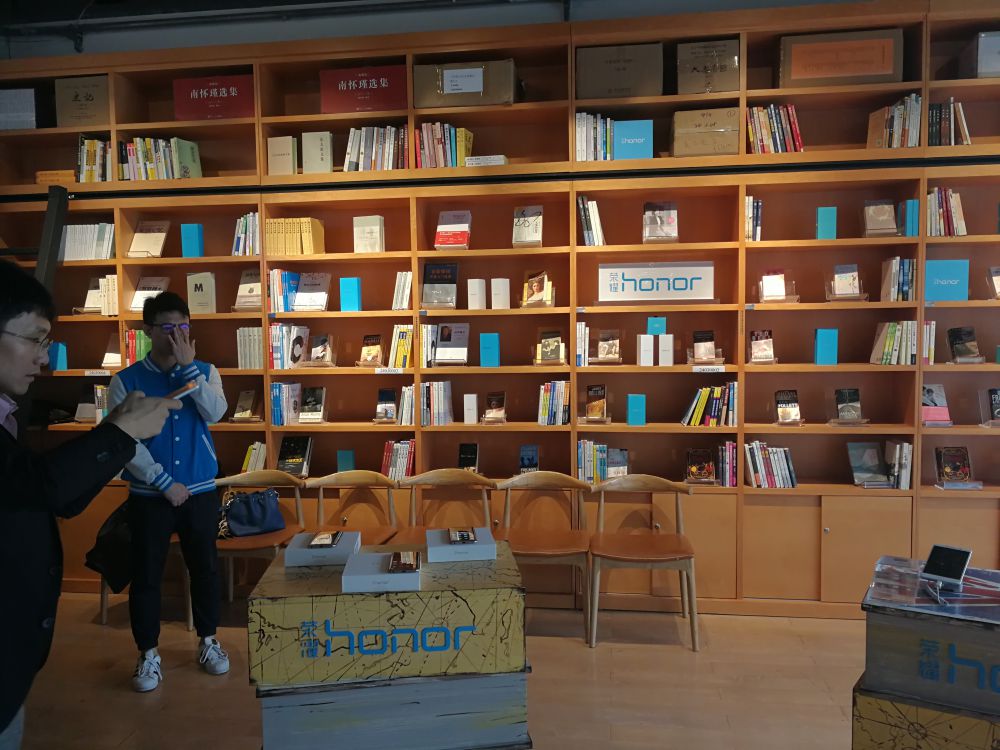 Honor Café — Shenzhen — China
 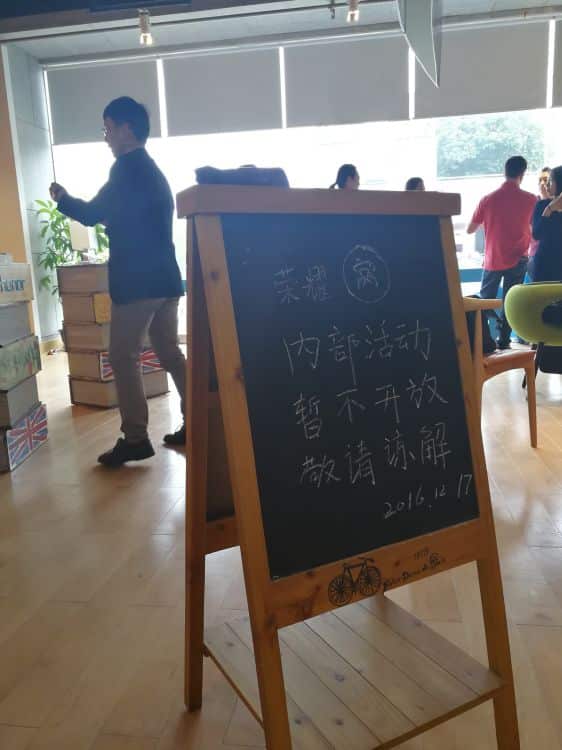 Honor Café — Shenzhen — China
 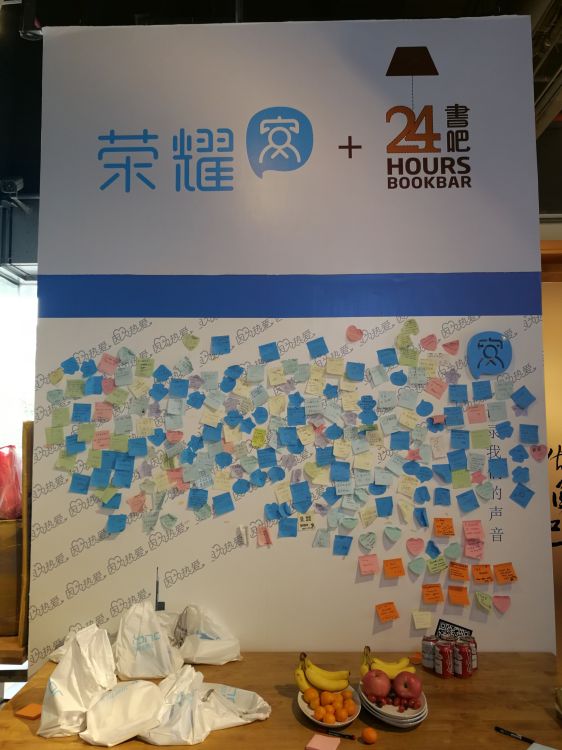 Honor Café — Shenzhen — China
 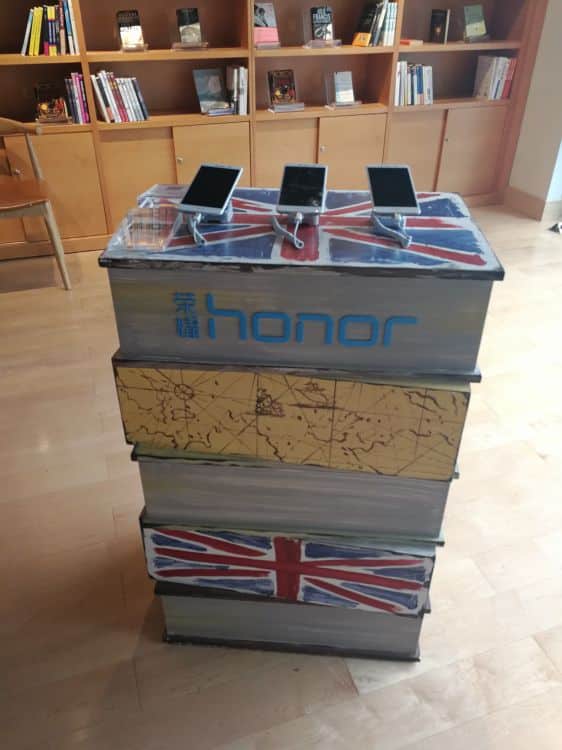 Honor Café — Shenzhen — China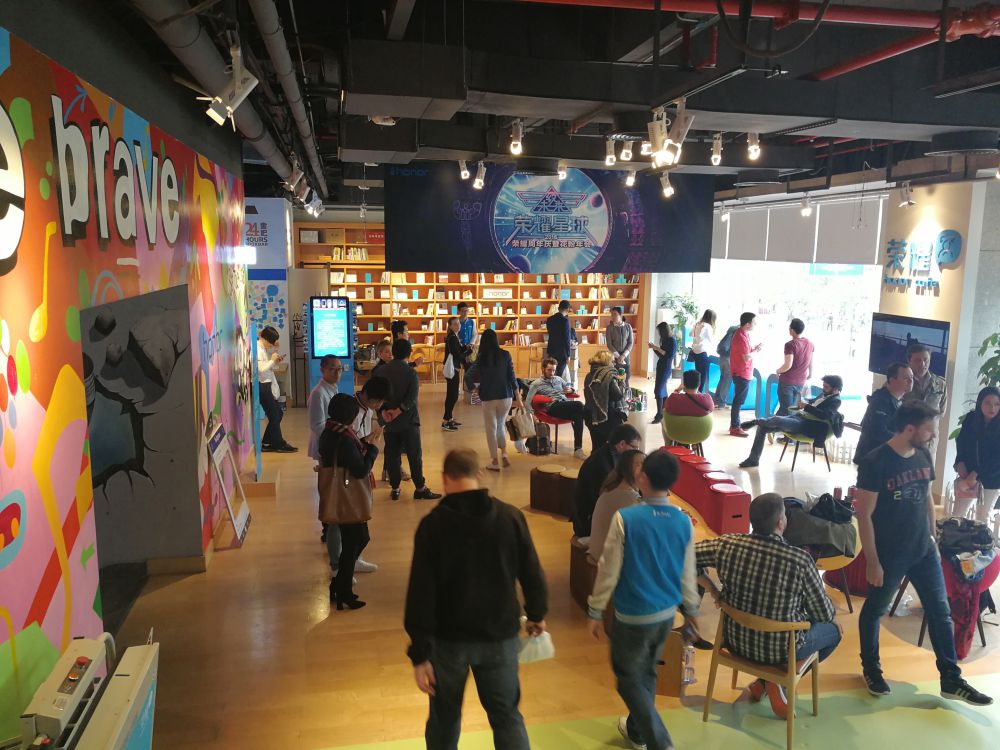
In short, Honor turns out to be a more “smaller,” agile, and flexible brand but above all capable ofdaring without fear of harm. The low prices set for Honor products, not just these “cheap” smartphones (call themkinesate if it makes you happy), in fact, fully demonstrate how it is possible — only if you call yourself Huawei — to offer amarket a cheap but very high-performance smartphone with great design Honor Café — Shenzhen — China (see Honor 8 or Honor 6X).
For now, we do not know what Honor’s future plans are to conquer the smartphone market. The only thing we know — because we have touched it firsthand — is that the brand is doing an excellent job, especially in terms of product development.
It’s a shame it took a trip to the other side of the world to understand everything.
Tag: huawei P20 pro