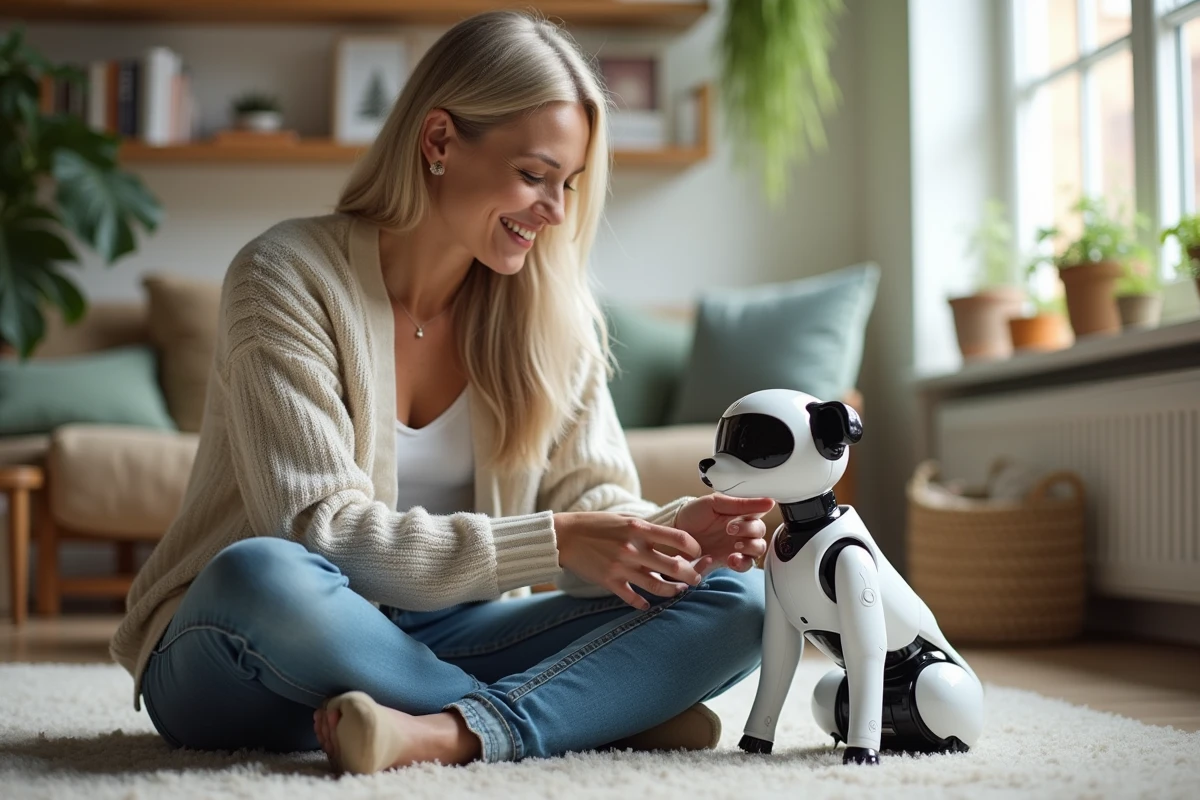
A dog that leaves no crumbs, never asks for a walk in the rain, and whose battery replaces the bowl: this scene is no longer science fiction. Japan has already integrated robotic dogs into some healthcare facilities to combat the isolation of elderly people. In South Korea, prototypes are being tested in family homes, sometimes as a replacement for a living animal. These devices benefit from distinct legal standards, escaping the regulations imposed on traditional animals.
The development of these artificial companions relies on advances in artificial intelligence, mechatronics, and behavioral design. Manufacturers talk about unprecedented benefits, while voices are raised to highlight the absence of genuine emotions and the transformation of the relationship between humans and animals.
Robotic dogs and humans: a new era for the human-pet relationship?
Adopting a robot dog disrupts the very notion of a domestic companion. Nursing homes, faced with the challenge of isolation, are introducing these robot dogs into the daily lives of residents. The result: a regular, interactive presence, without health concerns or care constraints. For many elderly people, it is a tangible support, a cognitive stimulation, a companionship that does not fade with absences or fatigue. The promise? To regain the warmth of a bond without the burden of grief or the sometimes too heavy physical responsibilities.
For children, the robot dog serves as an educational tool. It encourages learning about respect and responsibility while instilling a central question: what distinguishes the living from the artificial? Some even go so far as to personalize their robot, adjusting reactions and behavior according to desires or family context. In connected homes, these companion robot dogs communicate with smart objects, participate in home monitoring, and become multifunctional assistants.
Jean-Loup Rault, an expert on the human-animal bond, imagines a future where, by 2050, pets would largely be replaced by robots. Conversely, Harvey Castro reminds us that nothing can replace the richness of the emotional experience conveyed by a living animal. Where do we draw the line between simulation and authenticity? How far are we willing to accept the substitution of the living? These questions permeate contemporary society.
To grasp the extent of these changes, one can consult the innovations on Utile au Quotidien and measure how these new companions are reinventing the emotional bond within households.
Between technological prowess and limits: what animal robots change (or not) in our daily lives
The robot dog embodies the marriage of high-tech technology and artificial intelligence applied to domestic companionship. Sensors, 3D cameras, microphones, voice recognition: everything is designed to react to the environment, simulating the loyalty of a true companion. Thanks to machine learning, these machines learn the habits of families and adapt their responses over time.
Here’s how these devices integrate into daily life:
- Cognitive stimulation and emotional support: their presence in nursing homes promotes mental well-being and limits feelings of isolation.
- Home automation and security: some models monitor the home, report incidents, and communicate with automated systems.
- Alternatives for those allergic to animals: without fur or allergens, robotic companionship opens up to those who were deprived of living animals.
Autonomous navigation, emotion detection, interactivity: daily life is altered, but a boundary remains. The robot dogs do not achieve the spontaneity of the living, nor the unpredictability of a true companion. While science fiction has long fueled the fantasy of the robot dog, reality today offers precise uses: interactive entertainment, assistance, unprecedented presence. But the question remains: how far should innovation go to fill what only a real animal can offer?
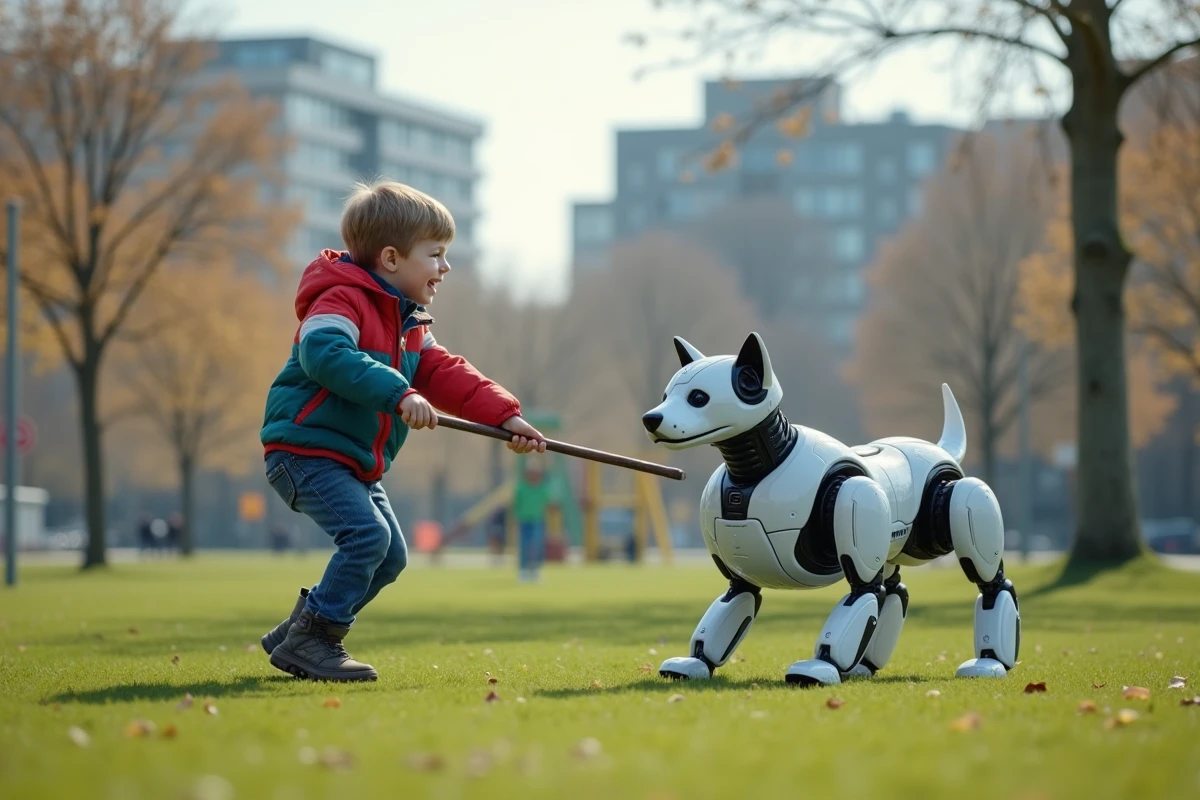
Can we really replace attachment and animal empathy with innovation?
The question of the emotional bond emerges as the real issue. A robot animal can accumulate technical prowess, yet it faces what the living animal embodies: warmth, the unexpected, that extra soul that cannot be coded. Sensors and algorithms can replicate reactions, detect an emotion, but it is only a reflection, never the authentic complexity of attachment.
Jean-Loup Rault posits the hypothesis of a massive substitution of companion animals by robots in the coming decades. In contrast, Harvey Castro argues that the emotional richness of a living dog cannot be replaced. This debate challenges society: what price are we willing to pay by accepting the disappearance of the relationship with the living, the learning of respect, grief, and transmission?
The companion robot dogs also raise ethical and social questions: data collection, respect for privacy, behavioral customization. Each device forces a trade-off between comfort and protection of personal data. While we gain simplicity, with no veterinary care and fewer material constraints, the relationship remains programmed, never organic.
Adopting a robot pet is not just a technical choice. It is a reflection on the place of the living in relation to the artificial, on the redefinition of the companion in our daily lives. The robot dogs invite us to rethink the relationship, empathy, and responsibility. Technology has already crossed a threshold; authentic attachment, however, continues to resist standardization. How far will we go? The coming years will shape the answer, one bark at a time.