
Getting the pasta portion right is essential for a balanced meal. Pasta, often the centerpiece of many dishes, can easily be over or underestimated in quantity. An adequate portion provides the necessary energy without excess calories. To avoid waste and maintain a healthy diet, it is important to master the ideal amount for each meal. Whether it’s for a solo dinner or a family feast, a few simple tips can help measure the right amount of pasta. It starts with understanding standard portions and adjusting based on individual needs and the chosen accompaniment.
The keys to perfect pasta portioning
Quantity per person: The basic rule recommends 100 g of uncooked pasta per person, a measure that transforms into 250-300 g once the pasta is cooked. This portion fits perfectly as a main dish and ensures a plate that is both satisfying and reasonable. Consider the variations between fresh and dried pasta, the latter swelling more during cooking, and adjust according to the type of pasta chosen.
Measuring without a scale: For those who do not have a precise measuring instrument like a kitchen scale, know that a handful or a standard glass can serve as a reference to estimate the amount of uncooked pasta per person. A yogurt pot can also provide an acceptable estimate for dried pasta. These empirical methods make daily preparation easier without sacrificing the precision needed for a balanced meal.
Factors to consider: Several elements influence the ideal portion: the appetite of the guests, the type of dish, and the accompanying ingredients. For a meal where pasta is a simple side, 60 g uncooked is sufficient. Children will be satisfied with 50-75 g. In case of leftovers, a pasta salad can be a clever solution to reuse them. Take these factors into account and adjust the quantity accordingly to avoid waste and ensure everyone’s satisfaction.
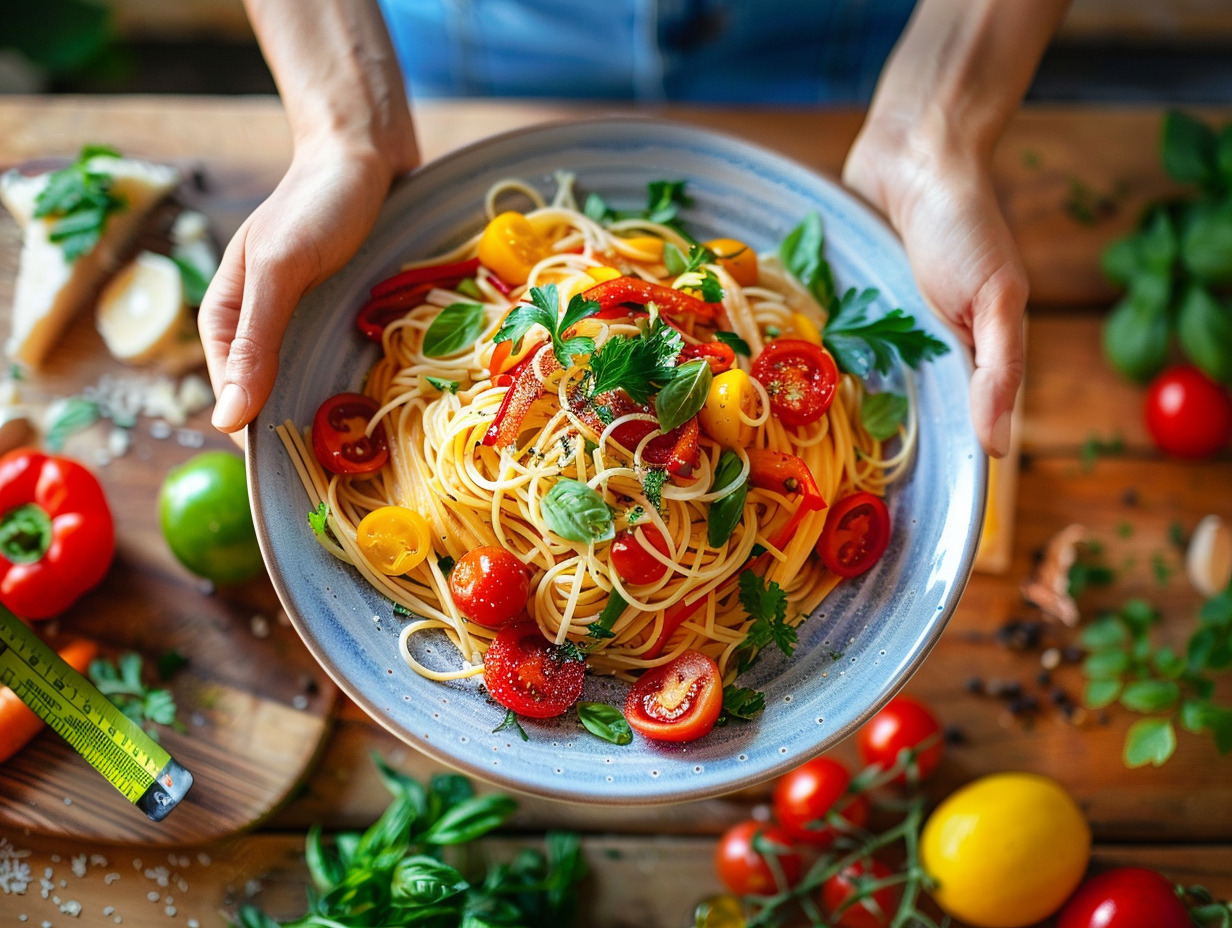
Practical tips for a balanced meal with pasta
Nutritional balance: To make your meal harmonious, ensure a balance between carbohydrates, proteins, and fibers. Pasta is an excellent source of complex carbohydrates, while adding proteins, whether animal or plant-based, and fiber-rich vegetables will help achieve satiety and maintain good intestinal transit. Follow this nutritional triad to create a complete dish.
Ideal cooking: Prefer cooking al dente. Not only does it better preserve the texture and flavor, but it also results in a lower glycemic index, a benefit for blood sugar management. Al dente pasta digests more slowly, providing a prolonged feeling of fullness.
Wise choice of pasta: Select the type of pasta based on the preparation. Choose rough pasta if it needs to cling to a sauce, short pasta for salads, and avoid angel hair for recipes like Carbonara, which require sturdier pasta to support the richness of the sauce. This discernment in choice will ensure the success of your dishes.
A simple recipe to start: If the goal is to master the basics, start with a simple recipe like buttered pasta. This will allow you to focus on the quality of cooking and the portioning of pasta. Once these elements are mastered, the culinary adventure can continue with more complex recipes, while keeping in mind the principles of balanced eating discussed.