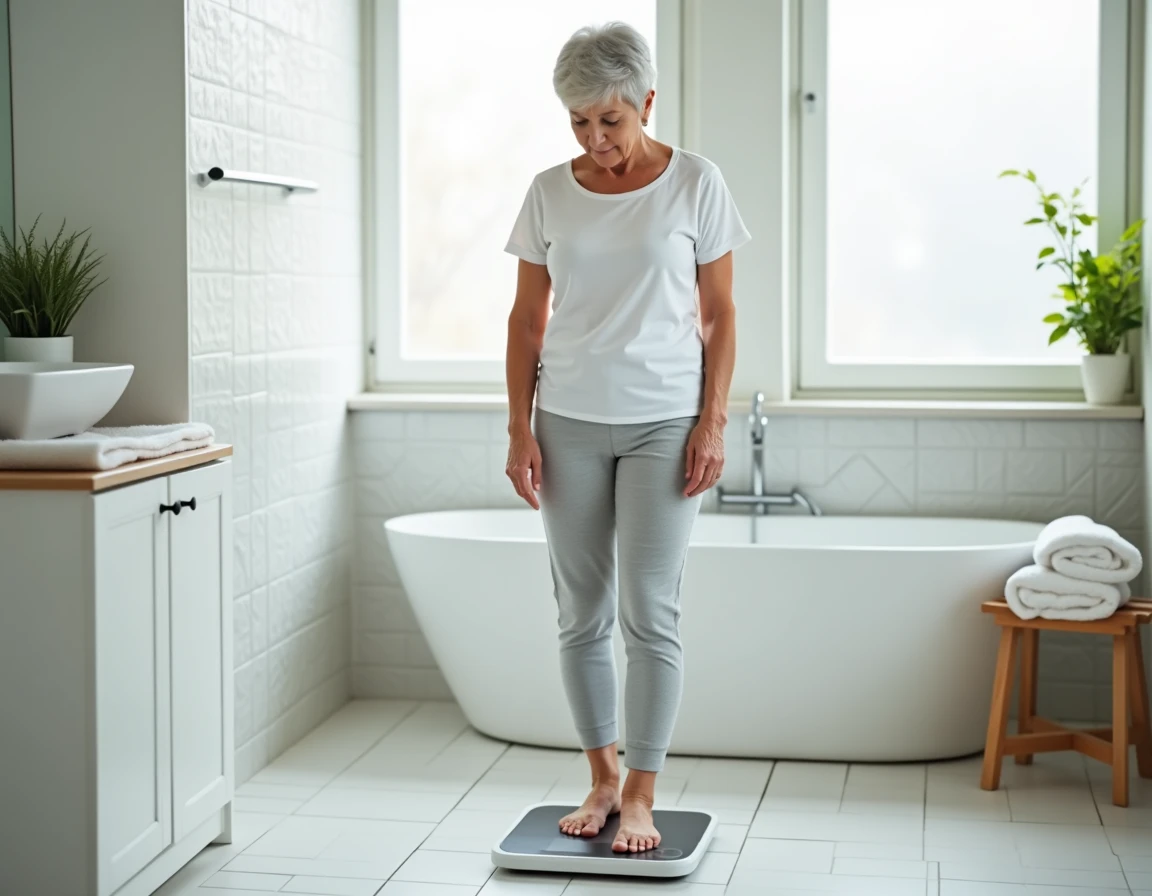
As we age, the loss of muscle mass (sarcopenia) becomes a major health issue, well before the question of the weight displayed on the scale. Consumer body composition scales promise to track this evolution from home. Their reliability in older adults raises questions that most buying guides do not address.
Muscle mass displayed by the body composition scale: what the measurement really captures in seniors
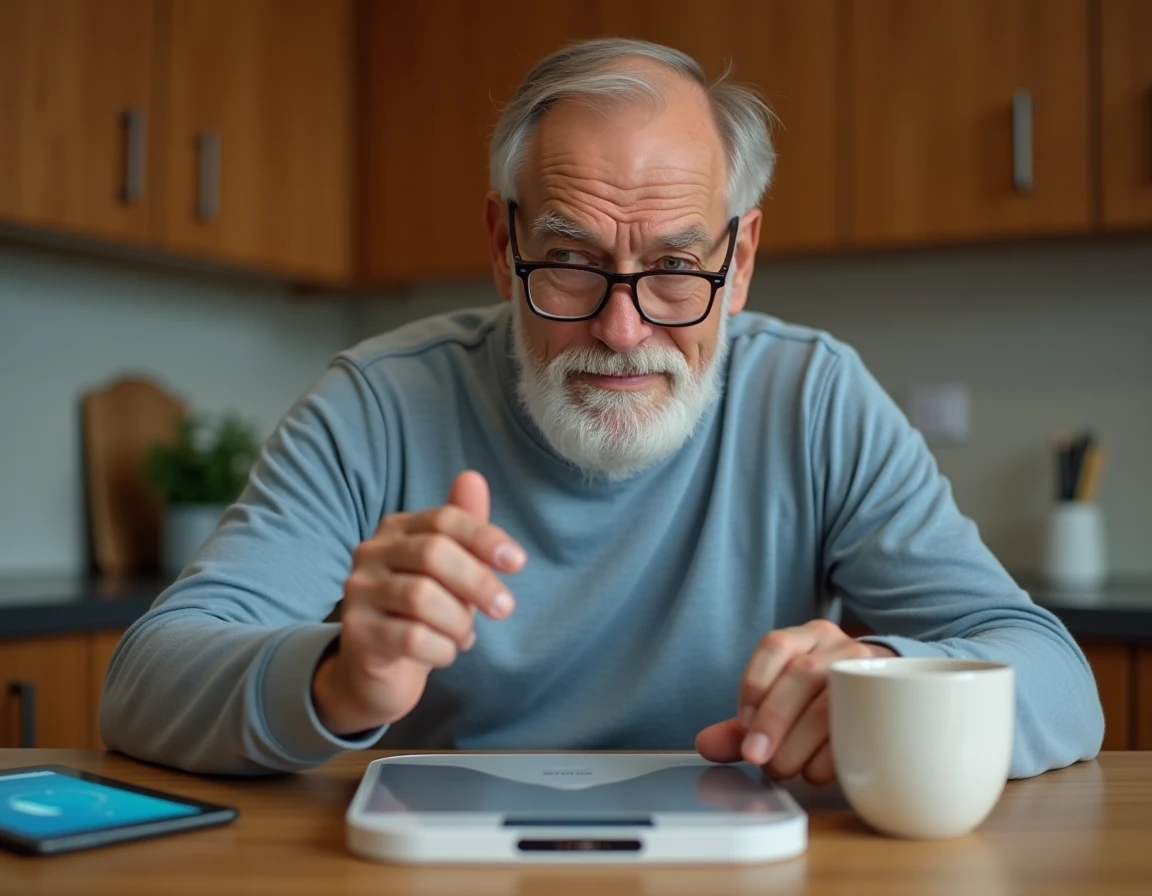
The principle of bioelectrical impedance analysis relies on a very low-intensity electrical current that passes through the body. The resistance posed by the tissues allows for an estimation of the distribution between fat mass, lean mass, and body water. On paper, the process works at any age.
In practice, home scales tend to underestimate fat mass and overestimate muscle mass in older adults. Frequent dehydration, osteoporosis, or already established sarcopenia skew the algorithms calibrated on younger profiles. Professional devices like InBody or the DEXA method used in medical centers yield significantly different results.
This does not render the scale useless, but it changes how to use it. An isolated figure of muscle mass displayed on a given morning holds little value. It is the trend over several weeks, measured under identical conditions, that provides insight. Always on the same day of the week, at the same time, before breakfast, with an empty bladder. Choosing a body composition scale for seniors first requires accepting this limitation and using it as a relative tracking tool, not as a diagnostic tool.
Segmental analysis and sarcopenia: the function that consumer guides overlook
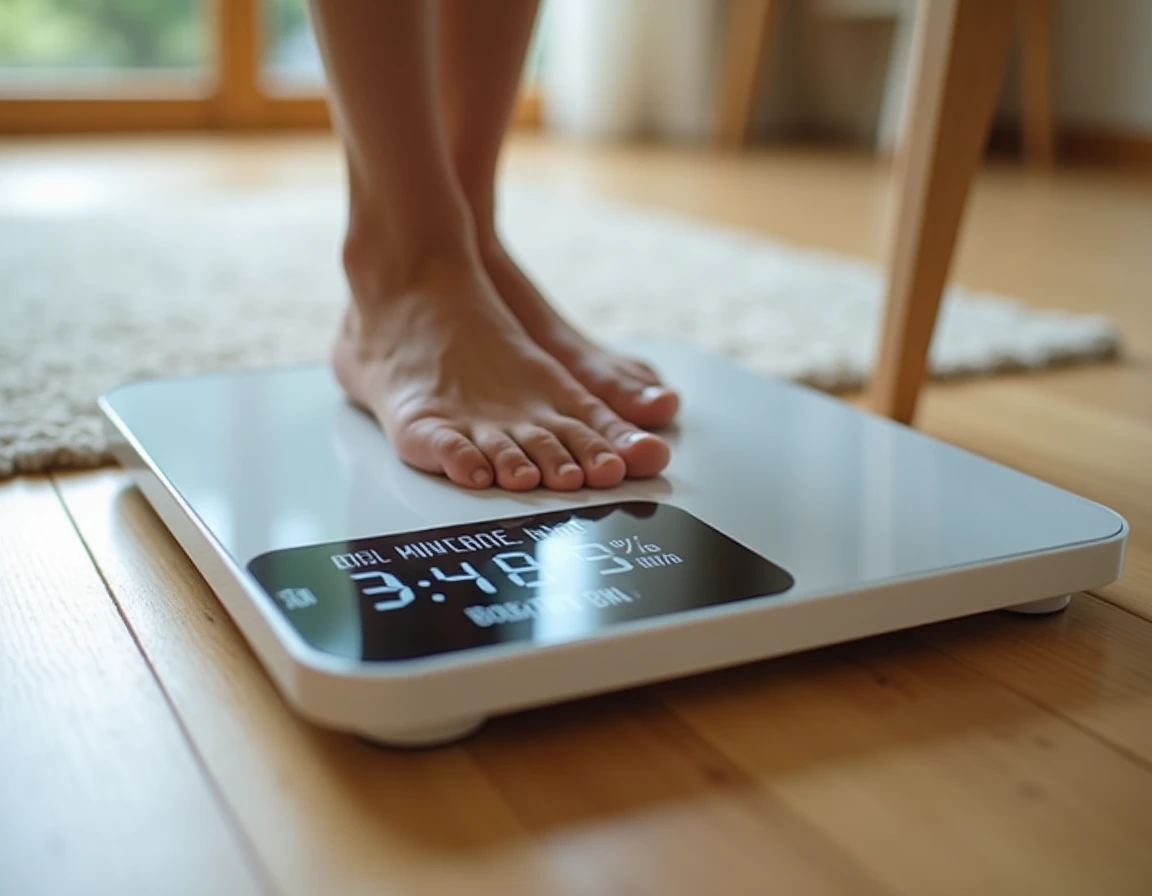
The majority of buying guides compare scales based on the number of user profiles, Bluetooth connectivity, or the design of the platform. These criteria matter, but they overlook a crucial feature for seniors: segmental analysis.
Models equipped with this technology measure body composition by area (arms, legs, trunk) instead of providing an overall figure. To detect localized muscle loss in the lower limbs, an early sign of sarcopenia, the difference is significant. A device that only displays a percentage of total muscle mass may mask targeted loss in the legs, where the risk of falling is critical.
Segmental scales remain in the minority in the consumer market. They are more common in professional or semi-professional ranges. When choosing, checking if the model at least distinguishes between upper and lower limbs is a more relevant selection criterion than compatibility with a specific fitness app.
Concrete selection criteria for a body composition scale suitable for seniors
Beyond segmental analysis, several points deserve special attention when the user is over 65 years old.
- The width and stability of the platform: a narrow or smooth glass platform increases the risk of imbalance. Some models offer non-slip surfaces or slightly wider platforms than average, a detail rarely highlighted in product descriptions.
- The readability of the screen: a backlit display with large numbers avoids the need to bend down. Models that send all data to a mobile app, without a clear display on the scale itself, pose a problem if the user is not comfortable with a smartphone.
- The number of measured data and their presentation: a scale that simultaneously displays fat mass, muscle mass, bone mass, hydration level, BMI, and visceral fat may overwhelm a user trying to track two or three indicators. It is better to have a device whose interface highlights the trend of evolution rather than an avalanche of raw numbers.
- The contraindication for pacemaker users: the electrical current sent by the body composition scale, even very low, remains inadvisable for people equipped with a pacemaker. This point is mentioned in the manuals but rarely in buying guides.
Combining the scale with a grip strength test: the recommended approach in geriatrics
Healthcare professionals in nutrition and geriatrics have been recommending for a few years now to not rely solely on the muscle mass displayed by the scale. The reason lies in a fundamental distinction: the quantity of muscle does not equate to functional quality.
A simple grip strength test, performed with a hand dynamometer, allows for cross-referencing data. If the scale shows stable muscle mass but grip strength declines, there is a risk of loss of autonomy despite reassuring numbers. Conversely, a slight decrease in muscle mass associated with maintained strength may be less concerning.
This combination of bioelectrical impedance analysis and dynamometer remains little practiced outside specialized consultations. However, it represents a preventive use that far exceeds the usual weight loss objective highlighted by manufacturers of connected scales. Some nutrition clinics and coaching studios now offer bio-impedance assessments that include this complementary measurement.
The choice of a body composition scale to monitor muscle mass after 65 should be considered as part of a broader follow-up, not as a standalone tool. The scale provides a trend, the dynamometer assesses function, and the healthcare professional interprets the whole. Keeping this hierarchy in mind avoids overloading a household device with expectations, as its accuracy in seniors remains inferior to that of medical devices.