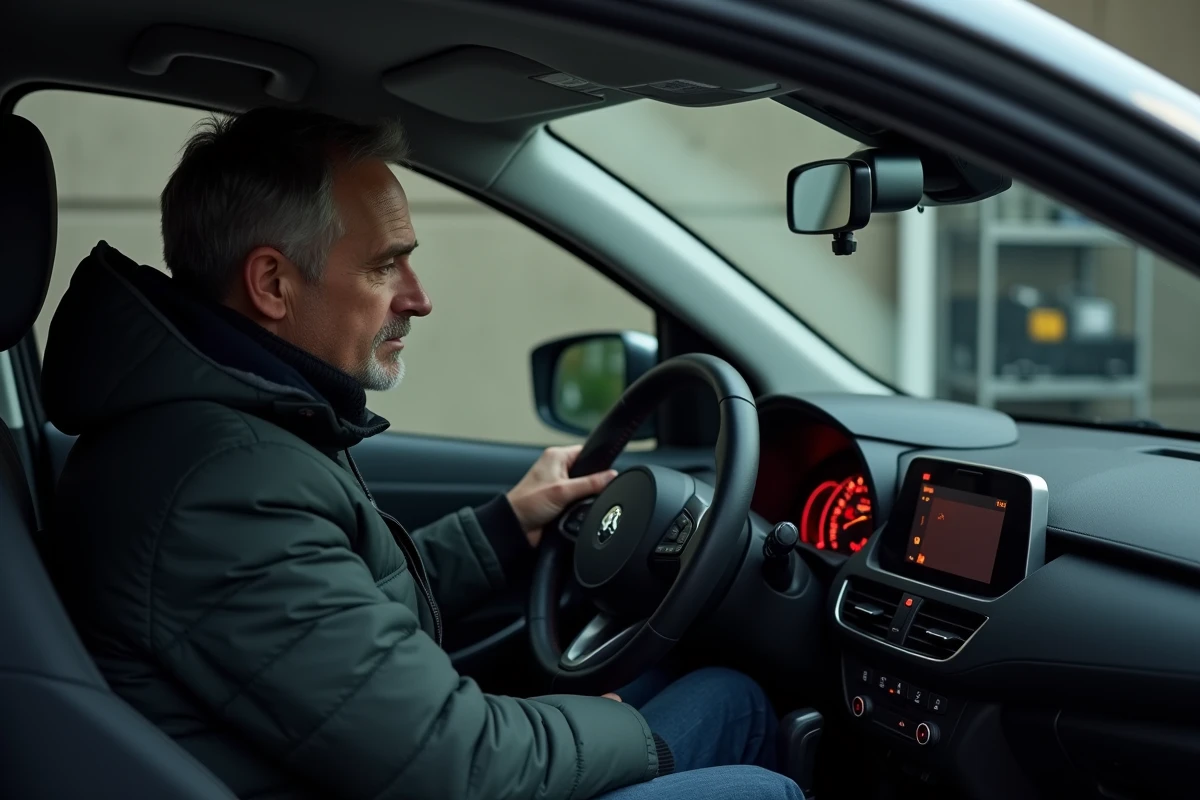
An orange warning light does not just blink to catch the eye: it demands action, sometimes trivial, sometimes crucial. On the Clio 3, certain symbols seem to play the troublemaker, like the airbag warning light that persists despite the replacement of the faulty sensor.
Behind the dashboard of the Clio 3, technology is never static. From one model year to another, from one engine to another, the signals evolve: the same pictogram can indicate an oil pressure issue or point to a temperamental sensor. Ignoring the alert risks weakening the mechanics or compromising your own safety. These lights are not there for decoration: they require attention and sometimes, an immediate response.
What do the dashboard lights on the Clio 3 indicate?
The dashboard of the Renault Clio 3 does not just display speed or fuel level. It acts as a sentinel, monitoring the car’s status in real-time. Each light conveys a specific message to the driver: warning of a minor defect, signaling a serious anomaly, reminding of maintenance operations, or ensuring that everything is functioning normally. This luminous language demands to be deciphered at the slightest alert: ignoring red means taking a risk; neglecting orange means postponing a problem that could worsen; green and blue simply reassure or inform.
For the Clio 3, the dashboard with warning lights encompasses numerous alerts: engine, oil pressure, coolant, braking, battery, electronics. These are signals that, together, provide an overview of the mechanics, safety systems, and onboard comfort.
In the face of this abundance of symbols, the driver’s manual remains the reference for correctly interpreting each alert. To review all the signals, the list of dashboard lights for the Clio 3 offers a useful overview and guides towards appropriate checks or repairs. For a vehicle that is already a few years old, knowing the meaning of each light helps prevent unpleasant surprises and maintain the reliability of your Clio 3.
Detailed meaning of the main warning lights: how to recognize them and interpret their message
As a true onboard lookout, the dashboard of the Clio 3 reacts to the slightest anomaly. The red lights offer no compromise: immediate stop required in case of insufficient oil pressure, overheating of the coolant, major fault in braking or battery. If the oil pressure light illuminates red, turn off the engine without delay: lubrication is no longer ensured, the engine’s survival is at stake. A red light for braking? Check the fluid level or suspect a hydraulic problem.
When orange or yellow lights appear, driving remains possible, but vigilance increases. An orange engine light? It indicates a problem with injection or emissions. Electronic diagnosis is imperative: worn lambda sensor, clogged EGR valve, blocked DPF, or poorly secured fuel cap, the range of causes is broad. The ABS light, often triggered by a faulty wheel sensor, alerts to the anti-lock braking system. The ESP manifests at the slightest flaw in stability assistance.
The wrench icon reminds of maintenance deadlines. The airbag light, also orange, draws attention to passive safety: connectivity under the seat, unrecognized impact sensor. On the diesel side, the glow plug light usually indicates worn plugs or an injection issue, while the tire pressure light (TPMS) signals any inflation defect.
To better navigate, here’s how to distinguish the main alerts:
- Red: immediate stop, imperative check (oil, brake, battery, engine temperature).
- Orange: control advised, electronic diagnosis required (engine, ABS, ESP, airbag, tire pressure).
The essential point: never neglect a signal, consult the manual or the specific list of lights for the Clio 3. This knowledge protects the mechanics and avoids many disappointments.

What to do if a warning light comes on? Risks, common causes, and appropriate solutions
On the Renault Clio 3, the appearance of a warning light on the dashboard is never trivial. A red light for oil pressure, coolant temperature, or braking requires stopping the vehicle immediately. The consequences of negligence? Engine failure, fatal overheating, ineffective braking. Before setting off again, immediately check the engine oil level, the coolant, or the brake fluid level. In case of doubt, it is better to seek the advice of a professional.
If an orange or yellow light comes on, it’s time to proceed with a diagnosis. An engine light, often related to an emissions sensor or the EGR valve, can also indicate a simple fuel cap that is not properly closed. A visit to the OBD-II scanner allows reading the fault codes and pinpointing the cause. A persistent ABS or ESP light? Most often, a wheel sensor needs attention. For the airbag, the connectivity under the seat is frequently the issue.
Here’s how to react to the most common alerts:
- Tire pressure (TPMS): check when cold, inflate, and reset the sensor if necessary.
- Glow plug light: test the plugs, check the injection circuit.
- Battery: check the charge level, replace the alternator if needed.
By adopting a routine of preventive maintenance, regular oil changes, and fluid checks, the number of warning lights on the dashboard can be significantly reduced. Because on the Clio 3, every light that comes on has its reason: at stake is the reliability of the mechanics and peace of mind on the road.