
Stage 1 engine remapping modifies the software mapping of the ECU, the electronic control unit that manages injection, ignition, and boost pressure. Unlike an additional box that connects in parallel, stage 1 directly rewrites the original parameters to release power that the manufacturer intentionally restricts. The gain is felt from the very first meters, but the mechanical, administrative, and insurance consequences deserve careful consideration.
Stage 1 remapping and ADAS systems: a technical blind spot
Have you noticed that your car’s ESP kicks in more often after an engine modification? This phenomenon has been documented by several specialized workshops since 2023.
On recent vehicles, traction control, ESP, and traction aids are calibrated based on the original power and torque. When a stage 1 increases the torque available at low revs, ADAS may react unexpectedly, especially during hard accelerations on wet roads. BMW and MINI tuners report more frequent ESP activations and unexpected wheel spins after a stage 1 that hasn’t been tested with the vehicle’s assistance systems.
The issue does not stem from the stage 1 itself, but from the lack of recalibration of the intervention thresholds of these systems. A serious tuner takes these interactions into account and adjusts the calibrations accordingly. If your mechanic never mentions ADAS during the discussion, it’s a warning sign. To delve deeper into the subject, gathering opinions on stage 1 engine remapping from owners who have experienced it on a model similar to yours remains the most reliable approach.
Technical inspection and remapping: what has changed since 2023
The question of legality consistently arises in forums. Here’s what to concretely remember.
Since the strengthening of post-WLTP procedures in 2023-2024, technical inspection centers are encouraged to report vehicles that are evidently remapped without approval. Professional federations like the FNAA and CNPA relay this heightened vigilance to their members.
In practice, inspectors compare measured pollution values and OBD data with manufacturer tolerances. A modified mapping can produce results outside of tolerance, leading to a failure at the technical inspection. Inconsistencies between the declared fiscal power on the registration document and the actual behavior of the engine constitute another point of vigilance.
Concrete consequences for the motorist
- A failure at the technical inspection requires reverting to the original mapping before re-inspection, which incurs additional costs and delays.
- In the event of an accident, the insurance may refuse compensation if the remapping was not declared, even if it was not the cause of the incident.
- The manufacturer’s warranty is systematically voided on the affected components (engine, turbo, gearbox) as soon as a software modification is detected.
Declaring the remapping to your insurer before carrying it out remains the only way to protect yourself. Some contracts accept modifications for an additional premium, while others exclude them entirely.
Real gains from a stage 1 on gasoline and diesel turbo engines
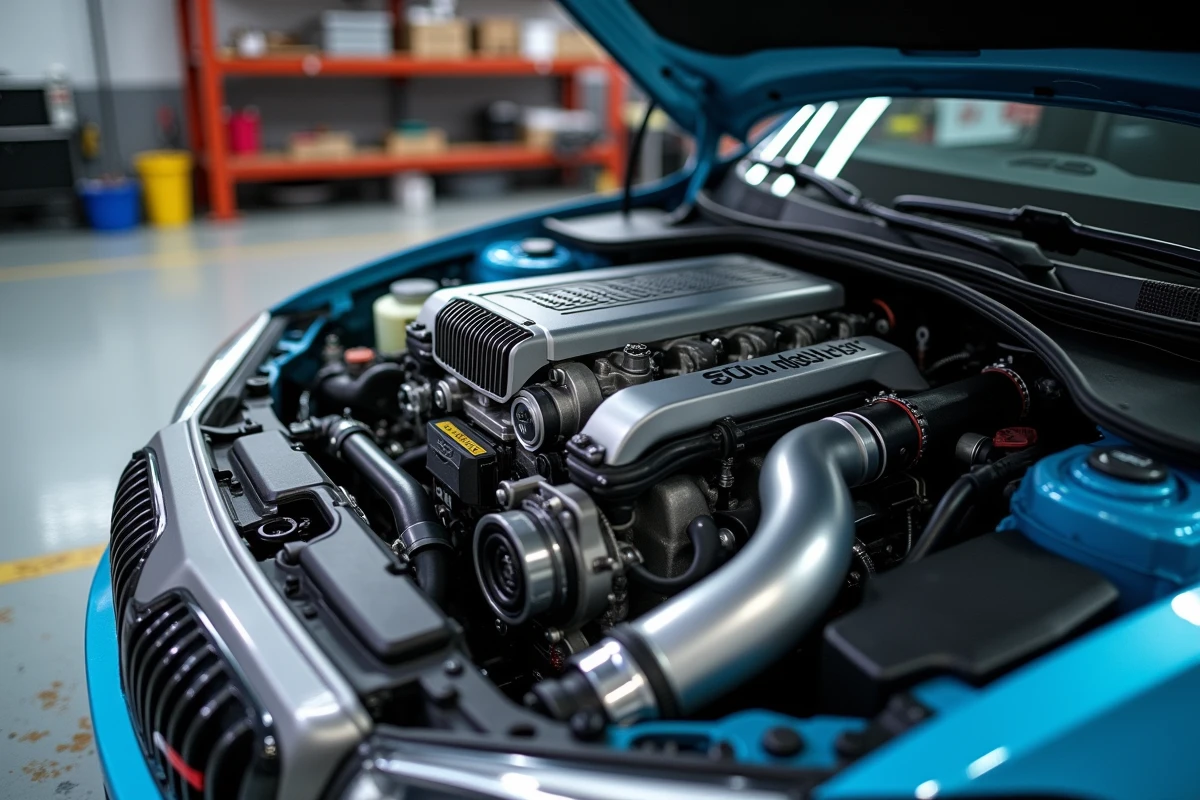
Stage 1 primarily affects three parameters: turbo boost pressure, injection timing, and ignition advance. Turbo engines benefit significantly more from a stage 1 than naturally aspirated ones, because the margin for improvement on boost pressure is substantial.
On a turbo diesel, the gain is mainly reflected in a more generous torque at low and medium revs. The car climbs better on hills, overtaking becomes more decisive, and driving under load (trailer, passengers) becomes easier. On a turbo gasoline engine, the gain in maximum power is more noticeable, with a sharper rev-up.
Case of motorhomes and utility vehicles
A rarely discussed case concerns motorhomes and heavy utility vehicles. For these vehicles, stage 1 is not purely about performance. It is more about a gain in safety and driving comfort: better overtaking capability on national roads, less under-revving in the mountains, and an engine that works less hard to maintain a stable speed.

Mechanical precautions before a stage 1: what breaks and why
A stage 1 does not modify any mechanical parts. This is its strength, but also its limitation. The software demands more from the turbo, injectors, clutch, and gearbox without these components being reinforced.
Why do some engines withstand without issue while others break? The answer lies in the initial mechanical condition. A worn turbo, a clutch at its limit, or a clogged cooling circuit will not withstand the additional load.
- Have the condition of the turbo (axial play, oil traces) and the cooling circuit checked before any intervention.
- Replace the clutch if the vehicle has high mileage: a worn clutch slips as soon as torque increases.
- Ensure that regular maintenance (oil change, filters, spark plugs) is rigorously up to date.
- Ask the tuner if they take EGR and DPF systems into account in their mapping, as their software removal is illegal in France.
A vehicle in good mechanical condition tolerates a stage 1 calibrated within the manufacturer’s safety margins very well. The risk of breakage almost always comes from neglected maintenance or an overly aggressive mapping proposed by a tuner looking to display flattering numbers on the dynamometer.
The choice of tuner matters more than the choice of stage. A competent professional conducts a complete diagnosis before intervention, tests the vehicle on the road after remapping, and provides a reversible mapping. Reversibility allows reverting to the original in case of resale, technical inspection, or warranty claims. This is a non-negotiable criterion when choosing who to entrust your vehicle to.