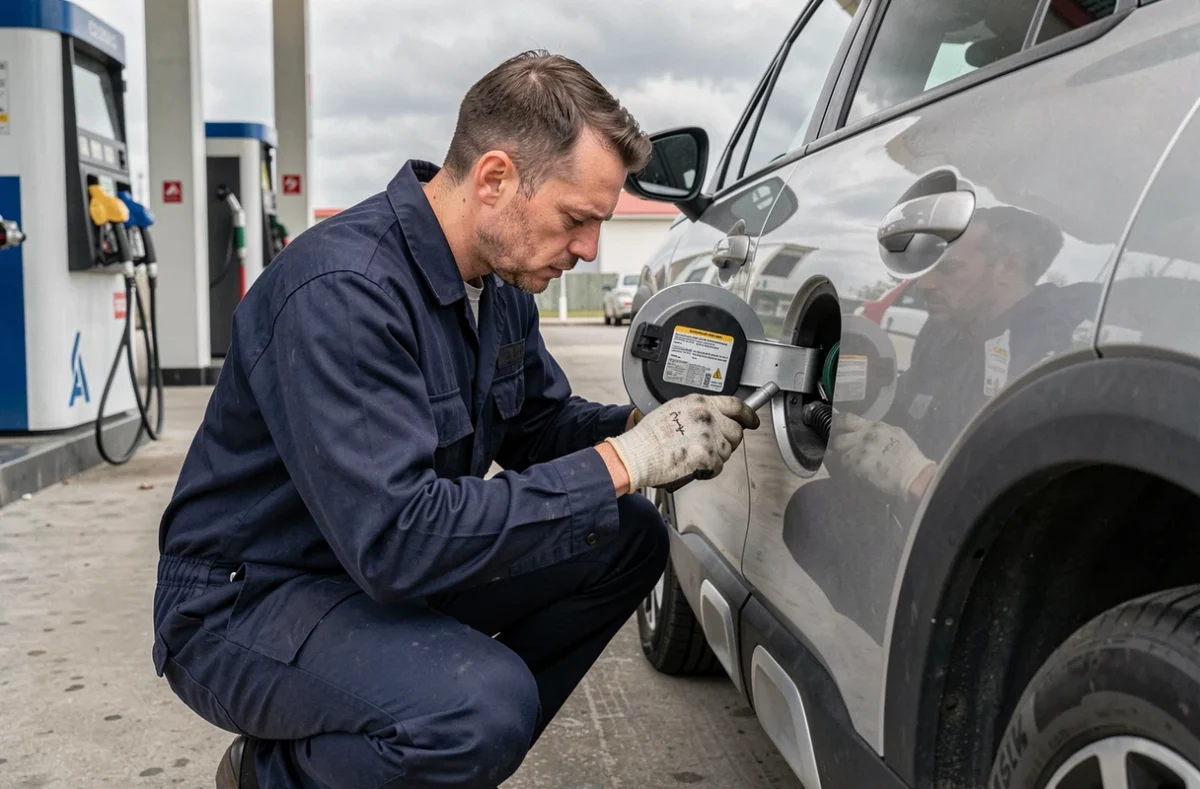
Driving cheaper with a C3 Aircross is an appealing idea. Bioethanol E85 costs significantly less than unleaded petrol, and the network of distribution stations is expanding every year in France. However, before filling up with E85, you need to check what your C3 Aircross’s engine can actually accept and what a conversion entails both technically and administratively.
Engine code of the C3 Aircross: the starting point before any E85 conversion
Simply saying “C3 Aircross” is not enough to know if the vehicle can run on ethanol. Citroën has equipped this model with several variants of the 1.2 PureTech engine (82, 110, or 130 horsepower depending on the model year). Each version has its own ECU, injectors, and specific calibration.
Compatibility depends on the exact engine code and the year of manufacture, not just the commercial name. A 2019 PureTech 110 and a 2022 PureTech 110 do not necessarily share the same internal components. Before taking any steps, retrieve the engine code listed on the registration document (field D.2) or on the vehicle’s manufacturer plate.
This engine code is then cross-referenced with the approval lists of certified flexfuel kit manufacturers. If your engine is not listed, no reputable installer should accept the conversion. As detailed by Motor X Club, the PureTech variants have differences that make registration verification necessary.
Approved flexfuel kit or reprogramming: two paths, two legal frameworks
You have confirmed that your engine is on a compatibility list. Now you need to choose the conversion method. There are two options, but they do not have the same legal status.

The approved kit, the only solution recognized administratively
The decree of November 30, 2017 regulates the approval and installation of conversion devices from petrol to E85. An approved kit allows you to modify the registration document to include the flexfuel mention. This official registration has concrete consequences: the insurer is informed of the vehicle modification, and the technical inspection can verify the consistency between the fuel used and the registration document.
The installation must be carried out by a certified professional. The kit intercepts the signal from the injectors and adjusts the amount of fuel injected based on the ethanol content detected in the tank.
Engine reprogramming, less visible but riskier
Reprogramming involves directly modifying the ECU software. It does not benefit from the regulatory framework of approved kits. The registration document cannot be updated through this method, which means the vehicle is officially running on an undeclared fuel.
In the event of a claim, the insurer may invoke an undeclared modification to refuse coverage. During a technical inspection, the absence of a flexfuel mention on the registration document also raises questions if the technician notices an anomaly in emissions.
Effect of bioethanol E85 on the PureTech engine of the C3 Aircross
E85 has a higher octane rating than SP95. This fuel burns differently, and this difference has both positive and negative consequences for engine operation.
Increased consumption and real savings
Ethanol contains less energy per liter than regular gasoline. As a result: consumption increases significantly compared to SP95. Despite this increase, the price per liter of E85 remains low enough for the financial balance to remain favorable on most trips.
For a driver who covers a lot of kilometers each year, the cumulative savings can justify the cost of purchasing and installing the kit. For limited urban use, the return on investment will be longer.
Reduced fouling, modified combustion temperature
Ethanol produces very little soot during combustion. The engine and exhaust system become less dirty than with unleaded petrol, which can prolong the lifespan of certain components. Turbo engines, like the PureTech, also benefit from the lower temperature in the combustion chamber.
On the other hand, ethanol absorbs more moisture than gasoline. This property (called hygroscopy) can pose problems for a vehicle that is driven infrequently or remains stationary for several weeks. The water absorbed by the fuel may cause corrosion in the fuel system if the seals and hoses are not suitable.
Concrete precautions after installing an E85 kit on C3 Aircross
The conversion does not stop at the installation of the kit. A few points of vigilance prolong the reliability of the engine and avoid unpleasant surprises.
- Check the condition of the hoses and connections in the fuel system during each service. Ethanol can weaken certain elastomers not designed for this type of fuel.
- Monitor the coolant. The modification of thermal conditions in the combustion chamber requires more regular checks of the level and quality of the coolant.
- Do not leave the tank almost empty during long periods of inactivity. Ethanol absorbs ambient moisture, and a low volume of fuel exacerbates this phenomenon.
- Keep the installation invoices and the kit’s approval certificate. These documents will be required during the technical inspection and in case of a claim.
Manufacturer’s warranty and insurance: what the conversion changes
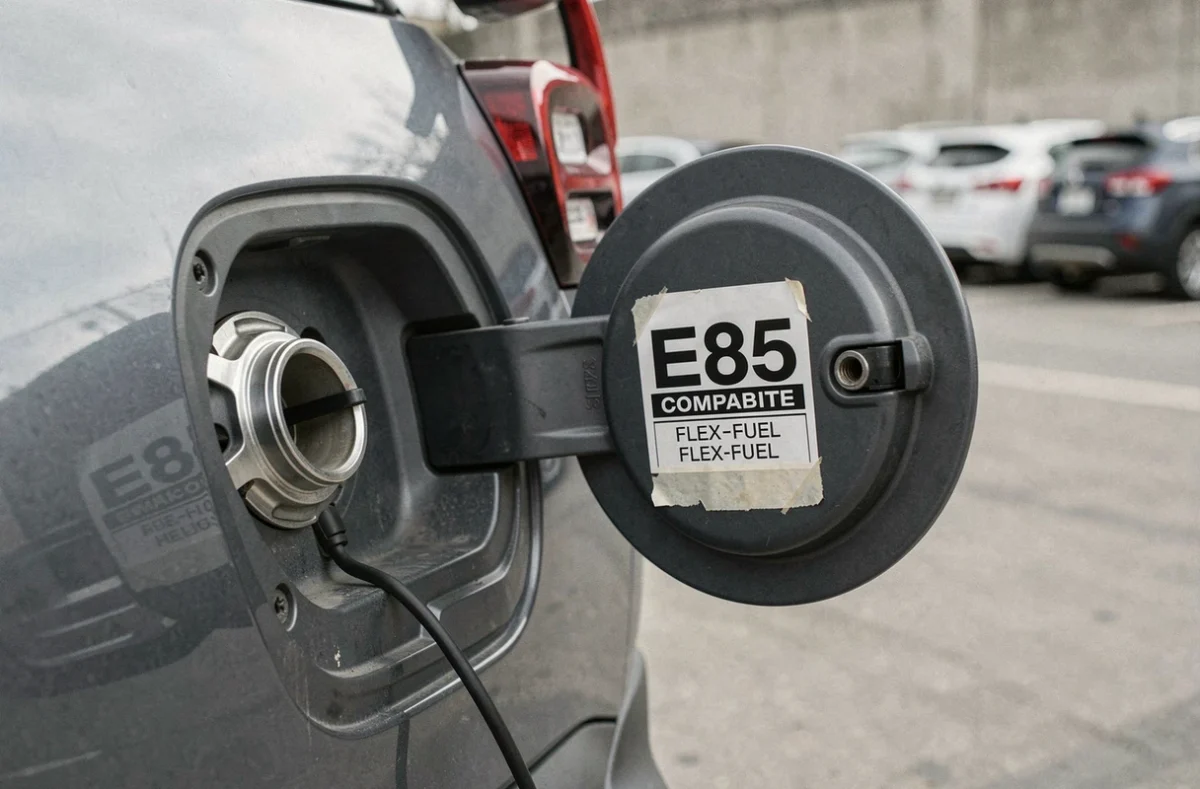
Citroën does not sell the C3 Aircross in a factory flexfuel version. The installation of an E85 kit may lead to the loss of the manufacturer’s warranty on components related to the fuel system and injection. If the vehicle is still under warranty, weigh the pros and cons before proceeding with the conversion.
Regarding insurance, declaring the modification is mandatory. An approved kit with an updated registration document simplifies the process. An undeclared reprogramming, however, places the owner in a gray area in case of disputes.
The decision to convert a C3 Aircross to bioethanol relies on a series of checks: engine code, approval list, type of conversion, administrative update. Each step conditions the next. Skipping any of them exposes the engine, warranty, or insurance coverage, sometimes all three at once.